
Last updated November 2, 2026
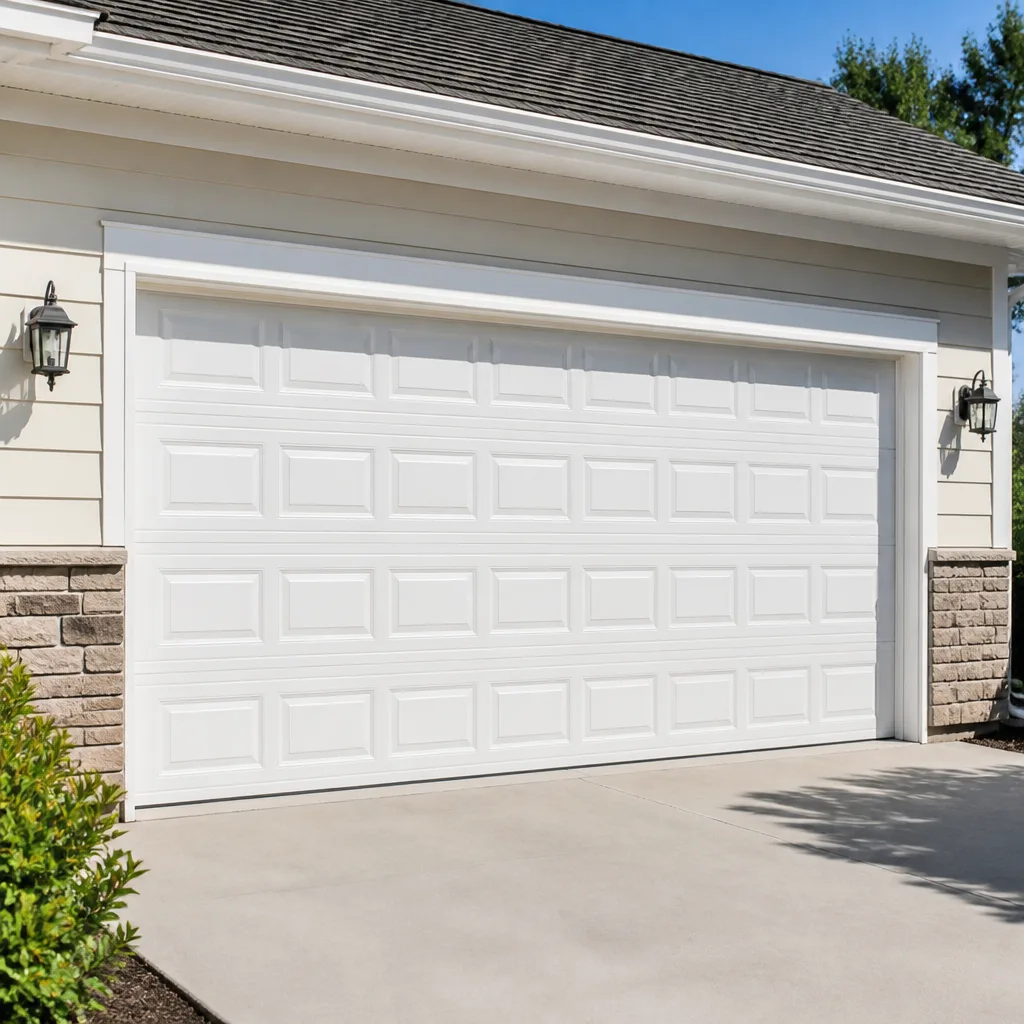 Raised-panel steel
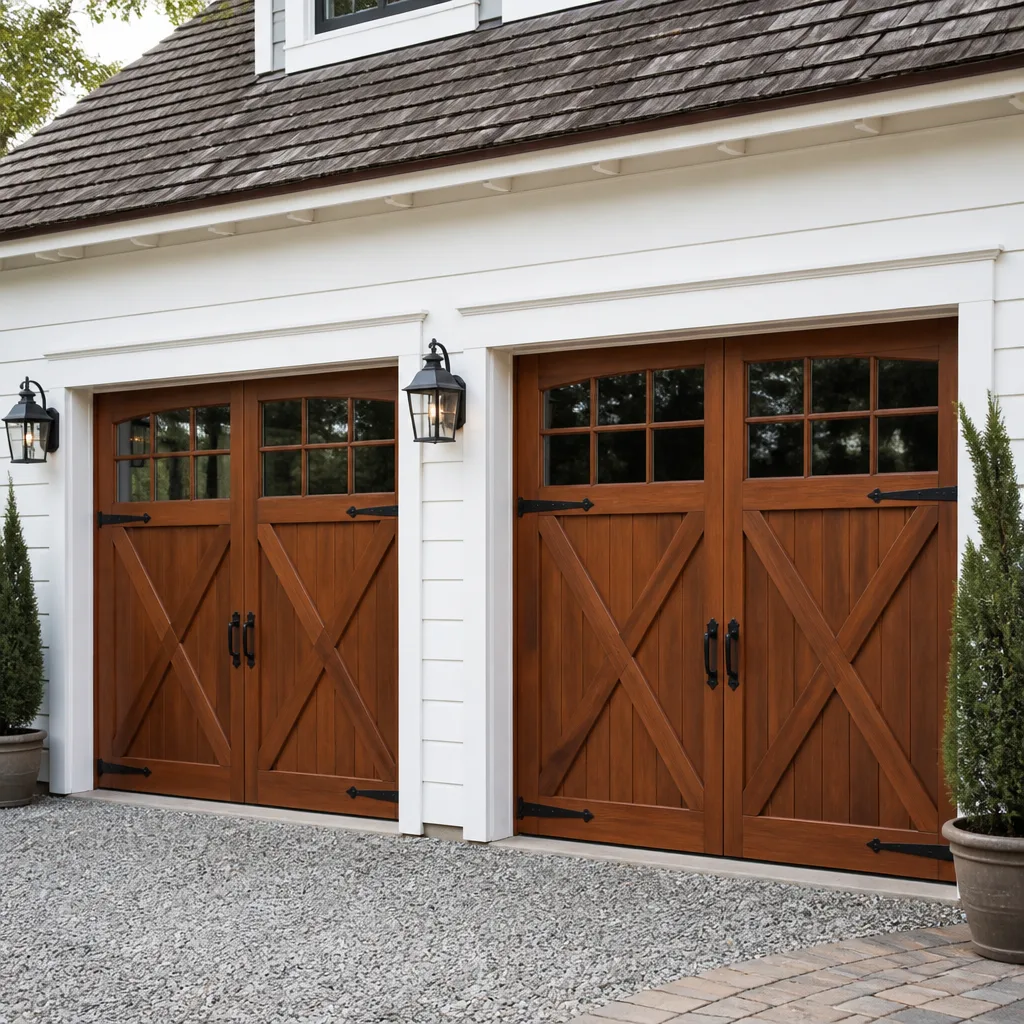 Carriage house
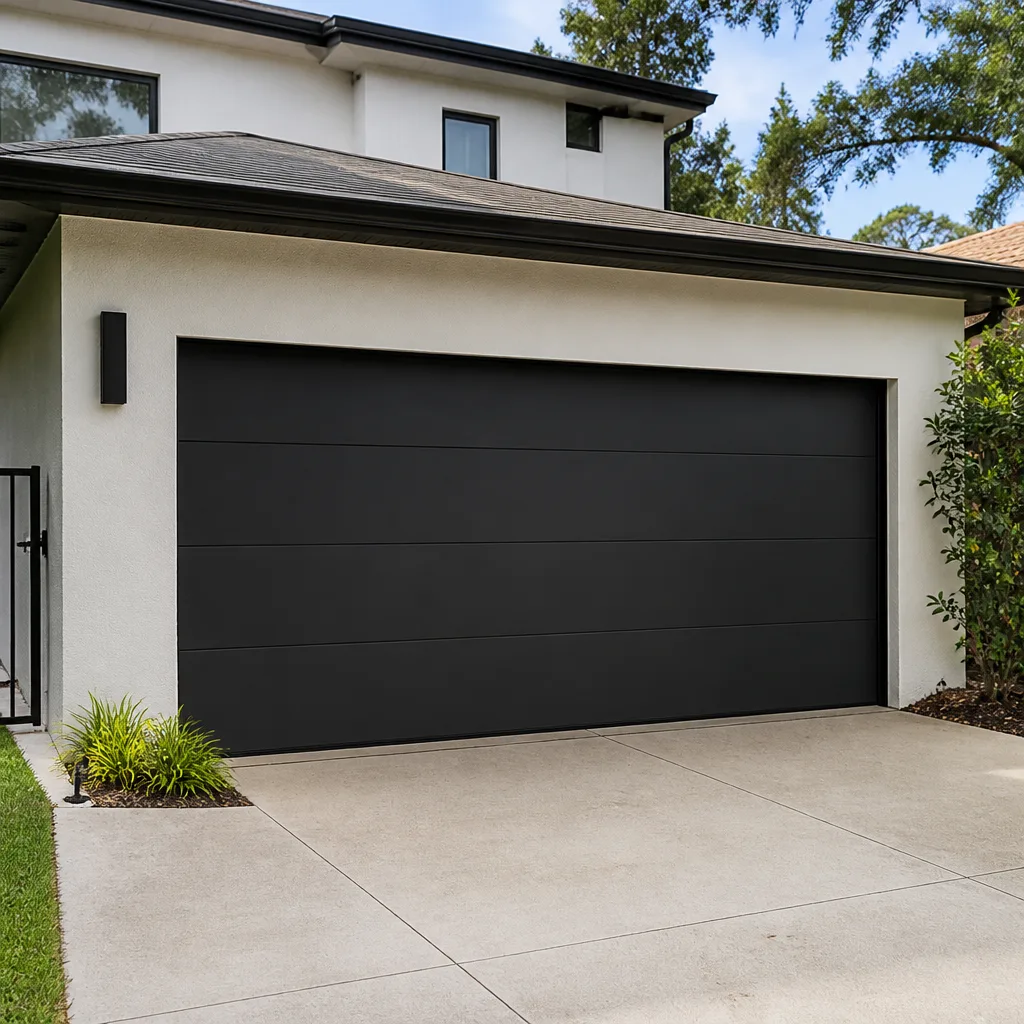 Modern flush
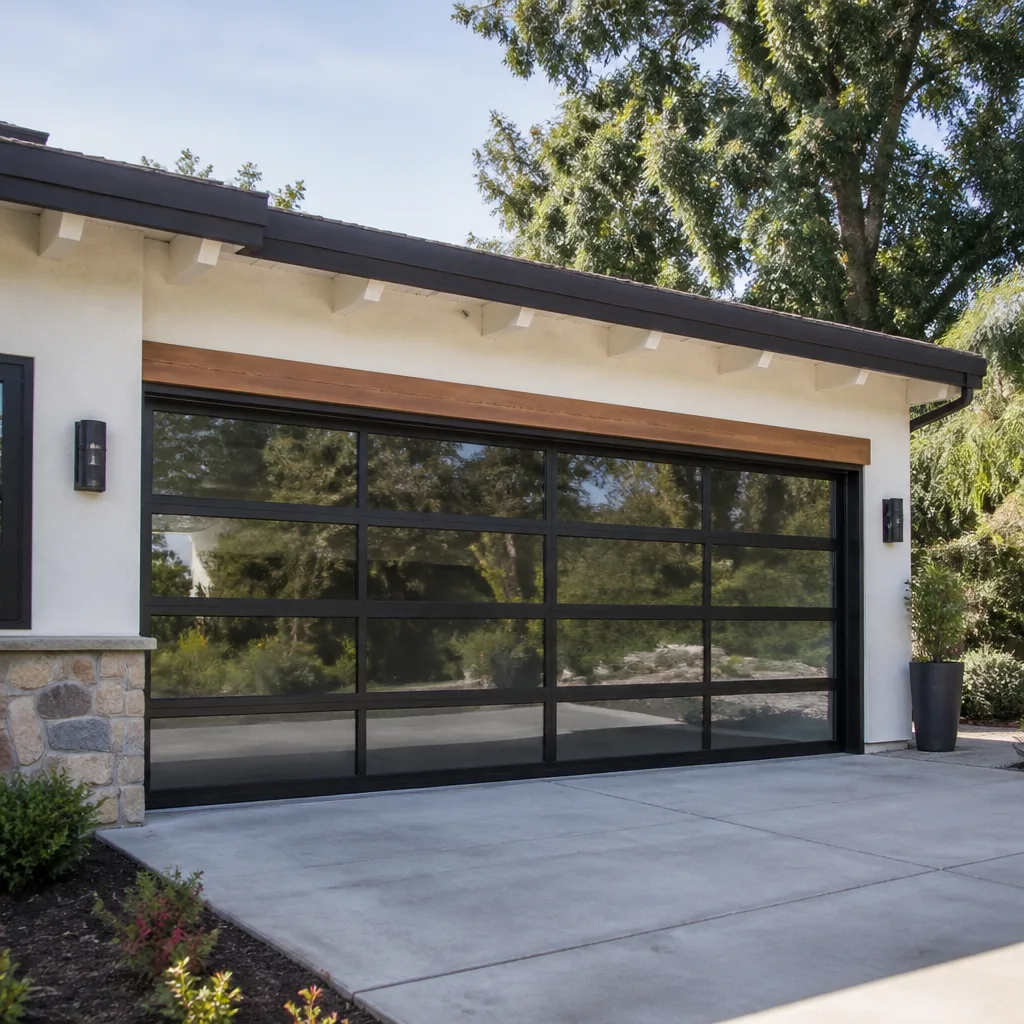 Full-view glass
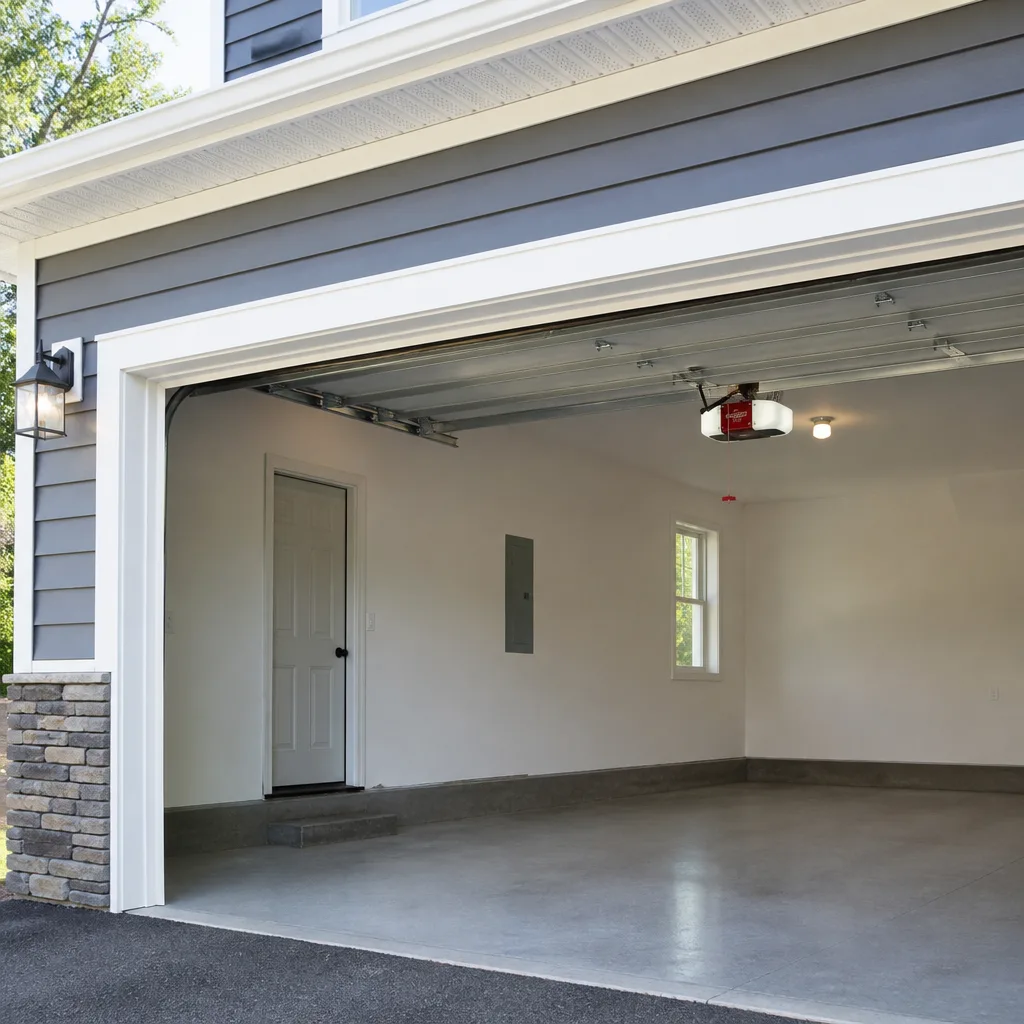 LiftMaster openers
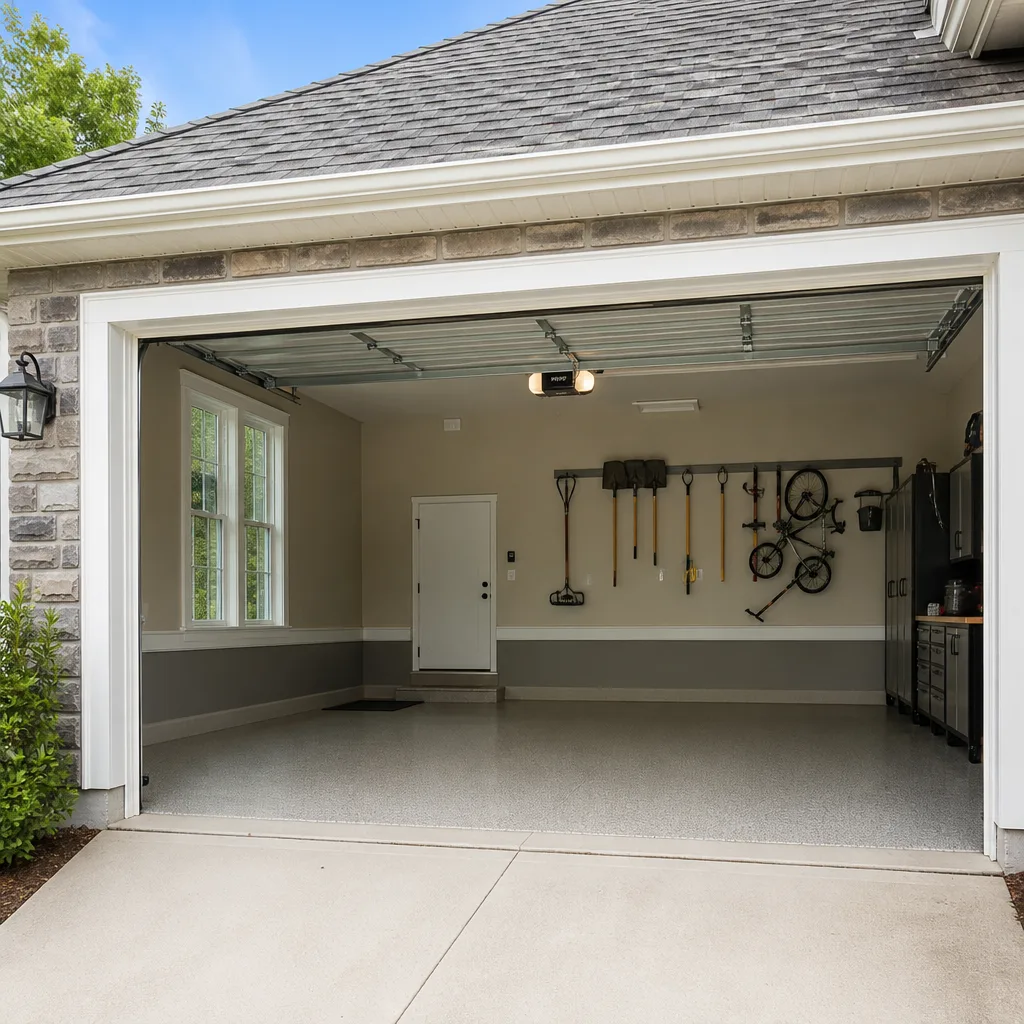 Chamberlain openers
Full 25-point door and opener safety check with every visit - springs, cables, rollers, tracks, and your LiftMaster or Chamberlain opener included
You get a price before we start. It does not change when the truck arrives.
Get your free estimateDIY vs Professional Garage Door: The Beaumont Homeowner’s Decision Guide
Every year, somewhere in Riverside County, a homeowner ends up in the emergency room because a torsion spring let go while they were working on it. The spring itself costs about $40. The medical bill doesn’t. Meanwhile, that same homeowner probably paid a technician $100 last spring to replace a bottom seal they could have swapped out in twenty minutes with a $15 part and a utility knife. The real question isn’t whether you’re handy. It’s whether the specific task in front of you belongs in the category of “annoying but safe” or “potentially life-altering.” This guide walks Beaumont homeowners through exactly which garage door repairs sit on which side of that line.
Quick Answer
Most garage door maintenance tasks, like lubricating rollers and hinges or replacing weatherstripping, are safe for a careful DIY homeowner. But torsion springs, lift cables, and anything involving the door’s counterweight system should always go to a licensed professional. In Beaumont, where summer heat adds extra tension to already-loaded springs, the risk of a DIY spring job goes up significantly. Our recommendation: handle the cosmetic and low-risk tasks yourself, and call a pro for anything that involves wound steel under pressure.
Styles & brands we work with
- Raised-panel steel
- Carriage house
- Modern flush
- Full-view glass
- LiftMaster openers
- Chamberlain openers
Table of Contents
- The Real Risk Line: What Actually Hurts People
- Definitely DIY: Tasks Any Careful Homeowner Can Handle
- Skill Required: Tasks That Need Know-How But Not a License
- Never DIY: Tasks Where the Risk Outweighs Any Savings
- What Beaumont’s Climate Does to Garage Doors
- The Real Cost Comparison: When DIY Actually Saves Money
- The Hybrid Approach: Saving Money Without Taking Risks
- Insurance, Permits, and Resale: The Hidden Liability of DIY
The Real Risk Line: What Actually Hurts People
Garage door injuries follow a predictable pattern. The Centers for Disease Control tracks roughly 20,000 garage door related emergency room visits annually across the United States, and the overwhelming majority involve one of three things: torsion springs, extension springs, or lift cables. These are the components that hold the door’s weight, typically 150 to 250 pounds for a standard two-car garage door in a Beaumont home built after 2000. When one of these parts fails under load, the stored energy releases instantly.
The reason springs are so dangerous is counterintuitive: they don’t look dangerous. A torsion spring is just a tightly wound coil of steel mounted above the door opening. It doesn’t spin while the door operates. It doesn’t make noise unless it’s already failing. But inside that coil is enough stored mechanical energy to drive a metal winding bar through a wall, or through a hand, if the spring unwinds unexpectedly. Professional technicians use specific winding bars sized to the spring’s cone, never screwdrivers or improvised tools, and they follow a precise winding sequence that accounts for the spring’s wire diameter and coil count.
So the risk line isn’t about skill level in the general sense. A very experienced woodworker who has never touched a torsion spring is no safer than a complete novice. The risk line is about whether the component, when it fails, fails toward you. Springs and cables fail toward you. Rollers, hinges, seals, and sensors fail away from you. That’s the distinction that matters.
Definitely DIY: Tasks Any Careful Homeowner Can Handle
These jobs require basic tools you likely already own, carry no meaningful injury risk, and are genuinely hard to get wrong in a way that causes damage. In our experience working on garage door repair in Beaumont, we see these tasks done badly more often than not, but done badly rarely means anything worse than reduced efficiency or a slightly noisier door.
Lubricating Rollers, Hinges, and Tracks
This is the single highest-value DIY maintenance task for Beaumont homeowners, because our dry, dusty climate accelerates friction wear on moving metal parts. Once or twice a year, apply a lithium-based grease to the roller bearings and hinge pivot points, and a light silicone spray to the track walls. Avoid WD-40; it’s a solvent that strips existing lubricant and leaves the metal drier than before. A can of proper lubricant costs $8 to $12 at any hardware store in Beaumont or nearby Banning, and the job takes under thirty minutes.
Replacing Bottom Weatherstripping
The rubber seal along the bottom of your door degrades in Beaumont’s summer heat, often cracking within two to three seasons. When it fails, you’ll notice dust, leaves, and in the winter months, cold air entering the garage. Replacement is straightforward: pull out the old seal from its aluminum retainer, slide in the new one, and trim to length. Kits cost $15 to $40 depending on door width. The only tool you need is a utility knife and a pair of pliers.
Tightening Loose Hardware
Garage doors cycle thousands of times per year, and all that vibration works bolts and nuts loose. A quarterly check with a socket set costs nothing and catches problems before they become repairs. Pay special attention to the track brackets mounted to the wall, the hinges connecting each panel, and the bolts on the opener rail. Do not, however, touch the bolts on the bottom brackets where the lift cables attach; those are under full spring tension.
Replacing Remote Batteries and Reprogramming
If your opener’s range has dropped from thirty feet to directly under the unit, the problem is almost always a dying battery. Replacement takes sixty seconds. If the opener has lost its programming entirely, the reset procedure varies by brand. For Chamberlain and LiftMaster units, there’s usually a “Learn” button on the motor housing. For older Genie systems, you’ll need to locate the code switches. For legacy Craftsman openers still common in Beaumont homes built in the 1990s and early 2000s, the process involves pressing and holding a specific button sequence on the wall console. Your owner’s manual has the exact steps, and if you’ve lost the manual, most manufacturers post PDFs online.
Skill Required: Tasks That Need Know-How But Not a License
These jobs sit in the middle of the spectrum. They don’t carry the catastrophic injury risk of spring work, but they require enough mechanical understanding that a mistake can damage the door, the opener, or both. In our opinion, a homeowner who reads instructions carefully and has basic hand-tool competence can realistically tackle these. A homeowner who doesn’t know the difference between a socket wrench and an adjustable wrench should probably call someone.
Replacing Rollers
Nylon rollers with ball bearings, the standard upgrade from cheap steel rollers, cost $8 to $15 each and noticeably quiet a noisy door. The complication is that the bottom two rollers on a standard door are attached to brackets that hold the lift cables. You cannot simply pop those rollers out; you must first relieve the cable tension, which requires working around the spring system. The top and middle rollers, on the other hand, are safe to replace with the door fully open and a pair of locking pliers holding the door in place. If you want to replace all rollers including the bottom ones, that’s the point at which we recommend bringing in a technician. The cost difference between full-roller replacement from a pro versus the parts-only DIY route is usually modest enough, around $80 to $150 in labor, that the risk adjustment makes it worthwhile.
Adjusting the Travel Limits and Force Settings
If your door reverses immediately when closing, or doesn’t close completely and leaves a gap at the bottom, the travel limits are out of adjustment. On most openers from LiftMaster, Chamberlain, and Raynor, the adjustment involves turning a plastic dial or screw on the motor unit. The process is documented in the manual and is reasonably foolproof. However, force settings are more touchy. Setting the closing force too high means the door won’t reverse when it encounters an obstruction, creating a genuine safety hazard. If you’re not confident reading the manual and testing the auto-reverse function properly, this is a job where a professional’s thirty years of accumulated adjustment experience prevents a mistake that could hurt someone.
Replacing the Opener Remote or Keypad
This straddles the line between DIY-simple and skill-required. Aftermarket replacement remotes are readily available online, but compatibility is not guaranteed across brands. A universal remote configured for a Chamberlain opener may not communicate properly with a Wayne Dalton opener installed in the early 2000s, because Wayne Dalton used proprietary frequency protocols before switching to standard rolling-code technology. If you buy a universal remote and it doesn’t pair, the fix is simple: use the return policy. But we’ve seen homeowners spend hours troubleshooting a compatibility problem that a technician would have identified in ninety seconds. For garage door opener repair in Beaumont, the parts markup on a replacement remote is minimal, and the benefit is knowing the remote works before the technician leaves your driveway.
Never DIY: Tasks Where the Risk Outweighs Any Savings
This section is short because the list is short. But it’s absolute. In our experience, these are the jobs that put homeowners in the hospital, and no amount of YouTube research or mechanical aptitude changes the danger profile.
Torsion Spring Replacement
Do not attempt this under any circumstances. Torsion springs are wound to precise torque specifications, typically seven to nine full turns for a standard residential door, and the energy stored in that coil is roughly equivalent to the muzzle energy of a handgun round. If a winding bar slips during tensioning, the bar becomes a projectile. If the spring snaps while under tension, the released energy can fracture the spring cone and send steel fragments across the garage. Professional technicians use hardened winding bars of exact diameter, safety glasses, and a structured process that includes marking the spring position before releasing tension. The spring itself costs $40 to $80. The labor and safety markup from a qualified technician is, in context, the cheapest insurance you’ll ever buy.
Lift Cable Replacement
Lift cables route through the bottom brackets and up to the drums at each end of the torsion tube. They carry the full weight of the door, and when a cable frays or snaps, the remaining cable is under full load. Replacing a cable requires releasing the spring tension entirely, feeding the new cable through the drum, and re-tensioning the system. A mistake at any point means the door drops, the spring decompresses, or the new cable jumps the drum. All three outcomes are dangerous. We see cable failures frequently in Beaumont, because our wind-driven dust works its way between the cable strands and accelerates wear over time.
Replacing or Repairing the Bottom Brackets
Bottom brackets are the components where the lift cables attach to the door. They’re under constant tension, and the bolts holding them to the door panel strip easily if you apply torque before releasing the cable load. If a bolt strips mid-removal, the bracket can rip free while still connected to the loaded cable. The resulting aluminum shrapnel and spring surge is the mechanism behind some of the worst garage door injuries on record. This job is not worth $3 in parts.
Full Door Replacement (If It Involves Springs, Rails, or Track Re-alignment)
Replacing an entire garage door involves disassembling the entire counterweight system, installing new track, aligning rails within an eighth of an inch, and tensioning new springs. It’s a two-person professional job, full stop. For homeowners considering a complete garage door installation in Beaumont, this is not a weekend project. It’s a scheduled service with a written quote and a likely permit requirement depending on the scope.
What Beaumont’s Climate Does to Garage Doors
Beaumont sits in the San Gorgonio Pass, one of the windiest corridors in Southern California. The same geography that makes Beaumont a surprising place to live also punishes garage doors. Sustained winds through the pass accelerate dust and sand against door surfaces, stripping the paint and eventually the galvanized coating from steel panels. Heat does its own damage: summer temperatures in Beaumont routinely exceed 100 degrees Fahrenheit, and the metal components of a garage door expand measurably at those temperatures.
The interaction between heat and spring tension is subtle but important. Torsion springs are rated for a specific cycle life, usually 10,000 cycles for standard springs and 25,000 to 50,000 for high-cycle springs. But that rating assumes moderate operating temperatures. In Beaumont’s heat, the steel in the spring fatigues faster, which is why spring failures here tend to happen in late summer and early fall, after months of heat stress have accumulated. If your spring breaks in September, it’s not random chance. It’s thermal fatigue.
Wind also warps panels over time. A standard aluminum panel door, common in Beaumont track homes built in the last twenty years, will gradually bow along the bottom edge as repeated wind gusts push against the unsupported span. This bowing changes the door’s geometry, which then changes how the rollers track through the rails, which then puts uneven load on the hinges and springs. It’s a cascade effect that’s nearly impossible for a homeowner to diagnose without experience seeing dozens of doors in this specific climate.
And then there’s the dust. Beaumont’s air carries fine particulate from the pass, and that dust accumulates in the tracks, the roller bearings, and the opener’s drive mechanism. If you don’t clean and re-lubricate regularly, the wear compounds. We recommend a seasonal check: before summer heat peaks and again after the first fall wind event.
The Real Cost Comparison: When DIY Actually Saves Money
The DIY-versus-pro decision often gets framed as a pure cost calculation, but that framing misses the actual economics. On some jobs, the parts markup from a professional is so small that DIY saves almost nothing. On others, the labor savings are real, and the risk is low enough that DIY makes clear sense. For a deeper look at what different repairs cost in this area, see our Garage Door Cost Breakdown: The Beaumont Homeowner’s Reference for 2026. Here’s what we see in the Beaumont market specifically.
For lubrication and weatherstripping, DIY is the obvious choice. A silicone spray and a new bottom seal run $20 to $50 total. A technician’s visit for the same work would cost $75 to $125. The parts are identical, the labor is trivial, and the risk is nil. Do it yourself.
For remote replacement and reprogramming, the math is closer. A universal remote online costs $20 to $35, but the compatibility risk means you sometimes end up buying two. A technician will supply the correct remote and program it on-site for $60 to $90 total. The DIY savings, after factoring in the time and the potential for a return, is maybe $30 to $50. That’s a reasonable tradeoff for convenience, but it’s not a meaningful financial win.
For roller replacement, the math changes by position. Replacing the top and middle rollers yourself costs $30 to $50 in parts and takes an hour. Replacing all rollers including the bottom requires the tension release work that pushes it into professional territory, and the full job from a technician runs $150 to $250 depending on roller quality. The DIY savings on the safe portion is real; the risk on the dangerous portion is the reason most homeowners call.
For spring replacement, the parts cost $40 to $80 per spring, and a professional replacement in Beaumont runs $250 to $450 including labor and the service call. That looks like a huge markup, but the markup buys the most dangerous part of the job being handled by someone who has done it hundreds of times. Attempting this yourself to save $200 is, in our opinion, a losing bet. The expected value calculation alone is negative, even before you factor in the hospital visit.
Here’s a breakdown of typical Beaumont pricing for common jobs:
- Bottom seal replacement: $15-$40 DIY, $75-$125 pro
- Lubrication service: $8-$12 DIY, $75-$100 pro
- Top and middle roller replacement: $30-$50 DIY, $150-$250 pro (all rollers)
- Single torsion spring: $40-$80 parts only, $250-$450 pro including labor
- Opener remote programming: $20-$35 DIY with compatibility risk, $60-$90 pro guaranteed
- Travel limit adjustment: Free DIY, $75-$100 pro service call
- Full door installation: Not a DIY job, $1,200-$3,500 pro depending on size and panel type
The Hybrid Approach: Saving Money Without Taking Risks
Most Beaumont homeowners we talk to at Northgate Garage Door Repair don’t want to hand us every minor task, and they don’t want to risk their necks on the dangerous ones. The hybrid approach splits the difference. You handle what’s safe, we handle what isn’t, and the total cost ends up lower than a full-service call because you’ve cut out the billable minutes spent on work you can do yourself.
Step 1: Do a Visual Inspection First
- Close the door and look at the panels from inside. Check for cracks, bowing, or paint that’s peeling more aggressively than normal.
- Open the door halfway and look at the track on both sides. Is there visible dust buildup? Are the rollers riding smoothly in the track or wobbling?
- Check the bottom seal. Run your hand along it from inside. Any gaps or brittle sections mean it’s time for replacement.
- Listen to the door cycle. Grinding means the rollers or hinges need lubrication. A loud bang means a spring has failed and you need a professional immediately.
Step 2: Handle the Safe Items Yourself
- Lubricate the rollers, hinges, springs, and tracks with a proper lithium or silicone product.
- Replace the bottom seal if it’s cracked or brittle.
- Replace remote batteries and test the reprogramming procedure from the manual.
- Tighten any loose bolts you can see, staying away from the bottom brackets and cable assemblies.
Step 3: Call for the Loaded Work
Make the call while noting exactly what you observed. If you can describe the symptoms precisely, the technician arrives knowing what to expect and the appointment goes faster. That’s not just good etiquette; it reduces billable time. And on any job we or any reputable company handles, the price is quoted and agreed before the work starts. You’ll never get an invoice that surprises you after the fact.
The beauty of the hybrid approach is that it mirrors how a thoughtful homeowner already handles other systems in the house. You clean your own gutters, but you don’t climb on the roof to replace the ridge vent. You change your own furnace filter, but you don’t install the gas line. Garage doors follow the same logic. The safe stuff is yours. The loaded stuff is ours.
Insurance, Permits, and Resale: The Hidden Liability of DIY
Most DIY garage door discussions focus on injury risk, which makes sense. But there’s a second layer of liability that homeowners in Beaumont, specifically in California, should understand before starting a repair they’re uncertain about. If you’re unsure whether your project needs official approval, our guide to Garage Door Permits, Codes & Inspections in CA: What You Need to Know covers the essentials.
Homeowner’s Insurance and DIY Repairs
California homeowners insurance policies typically cover garage door damage caused by accidents, fires, storms, or vandalism. But if an insurer determines that a claim resulted from improper DIY repair work, coverage can be denied. A door that falls off its track because you replaced a roller incorrectly and deformed the track bracket is not a covered loss; it’s a maintenance failure caused by unqualified work. Insurance companies have adjusters who see this pattern regularly, and they’re trained to look for it. The same principle applies if a DIY spring repair fails and the door collapses onto your car. Your auto insurance might cover the car, but your homeowner’s policy likely won’t cover the door repair.
Permit Requirements in Beaumont
The City of Beaumont, like most California municipalities, requires building permits for garage door replacement when the structural opening changes or when the replacement door exceeds a certain weight threshold. Full door replacements in new track typically trigger a permit through the city’s building department. Repair work on an existing door, including spring replacement, does not require a permit. The distinction hinges on whether you’re modifying the structure or maintaining it. If you’re unsure, the city’s planning department can clarify, and any licensed contractor doing the work should know the answer immediately. For storm-season readiness tips, see our Garage Door Emergency Preparedness Guide for Beaumont Homes.
Resale Disclosures
California law requires sellers to disclose known defects or material issues with a home, including the garage door and its automatic opener. If you’ve done DIY repair work that later fails, and the buyer discovers the failure after closing, you may be liable for the repair cost if you failed to disclose the condition. This is a low-probability but high-consequence scenario. Professional repair work, with a paper trail, shifts that liability to the service provider. For homeowners planning to sell within a few years, this is a real, if underappreciated, benefit of hiring a licensed technician.
Common Mistakes to Avoid
- Using WD-40 as a garage door lubricant. WD-40 is a solvent, not a lubricant. It cleans and penetrates, then evaporates, leaving the metal drier than before. Use lithium grease on bearings and pivot points, and silicone spray on the track.
- Attempting to replace a torsion spring with screwdrivers as winding bars. Screwdrivers are not rated for the torque involved, and the handles can shatter under load. The resulting projectile is the exact mechanism of most spring-related injuries.
- Ignoring a bowing panel because the door still works. In Beaumont’s wind, a bowed panel changes the door’s geometry, which accelerates wear on hinges, rollers, and the opener. A $200 panel replacement now beats a $500 track-and-roller repair in eighteen months.
- Reusing old rollers when replacing the door or track. Old steel rollers with flattened bearings will tear up new track in months. If you’re paying for new track, the incremental cost of new nylon rollers is small and the lifespan difference is significant.
- Buying a universal remote before confirming your opener’s frequency and protocol. Older Wayne Dalton and Genie openers used proprietary communication standards. A universal remote that works with Chamberlain gear may be useless with a 2004 Wayne Dalton unit.
- Testing the auto-reverse function with a person instead of an inanimate object. Use a 2×4 laid flat in the door’s path. If the door doesn’t reverse on contact, the closing force is set too high and the opener is unsafe for children and pets.
- Delaying a spring replacement because the door still opens manually. A broken spring means the opener is now lifting the full door weight unassisted, which it’s not designed to do. Running the opener on a broken spring destroys the opener’s gears and motor in short order.
See the difference
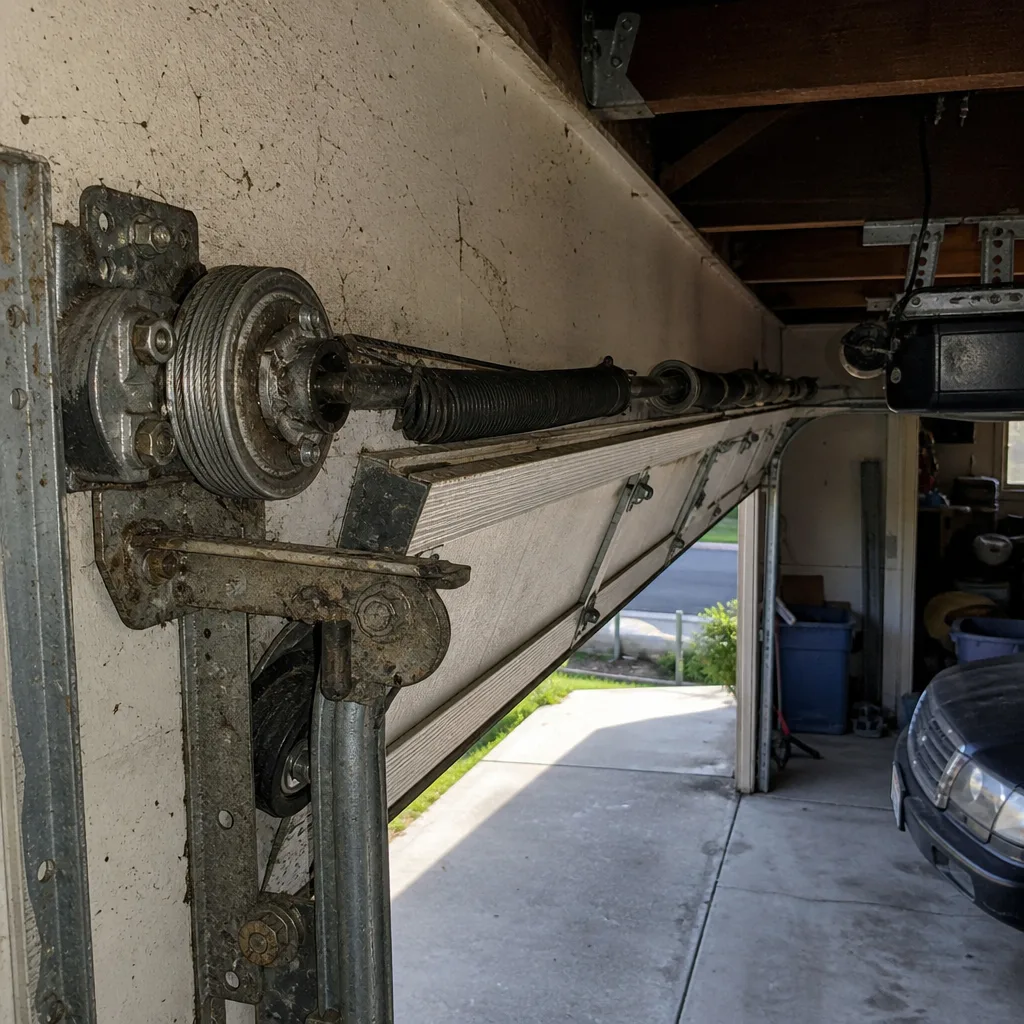 Before
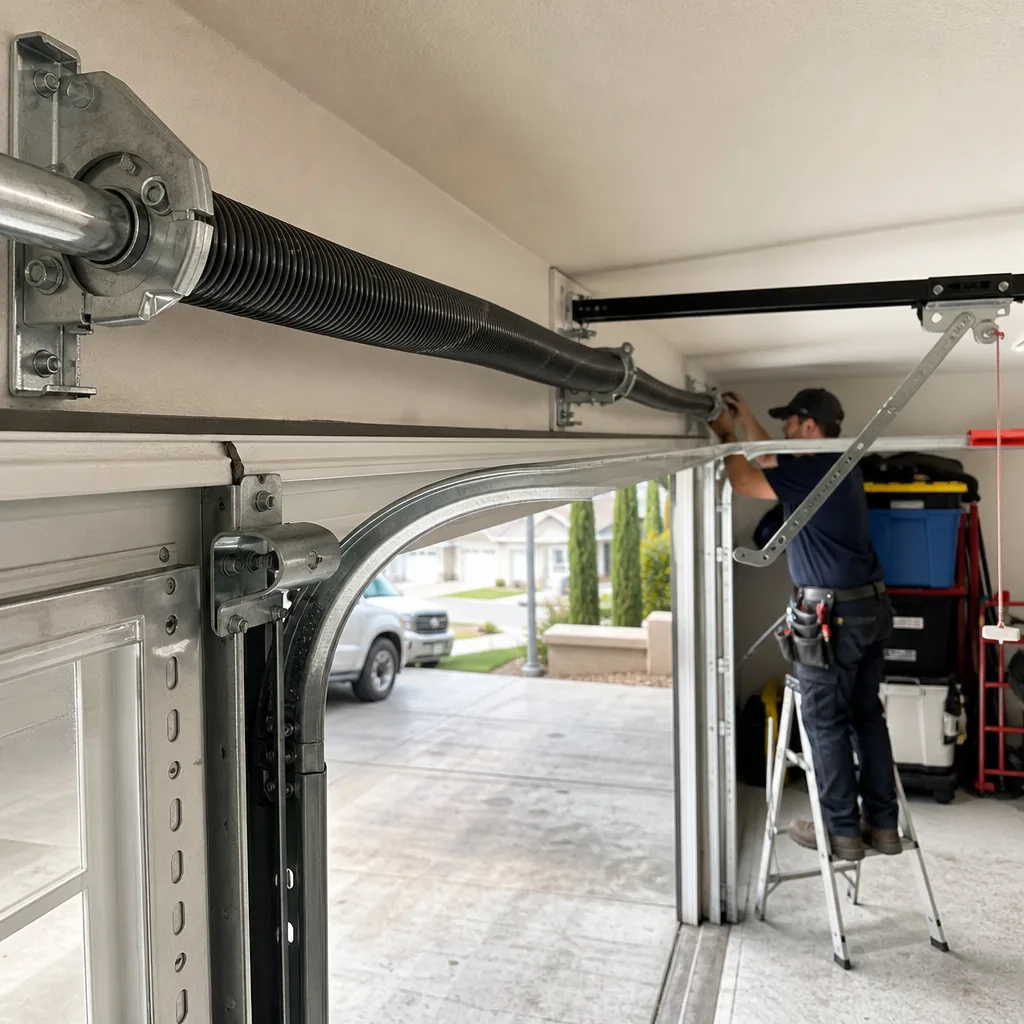 After
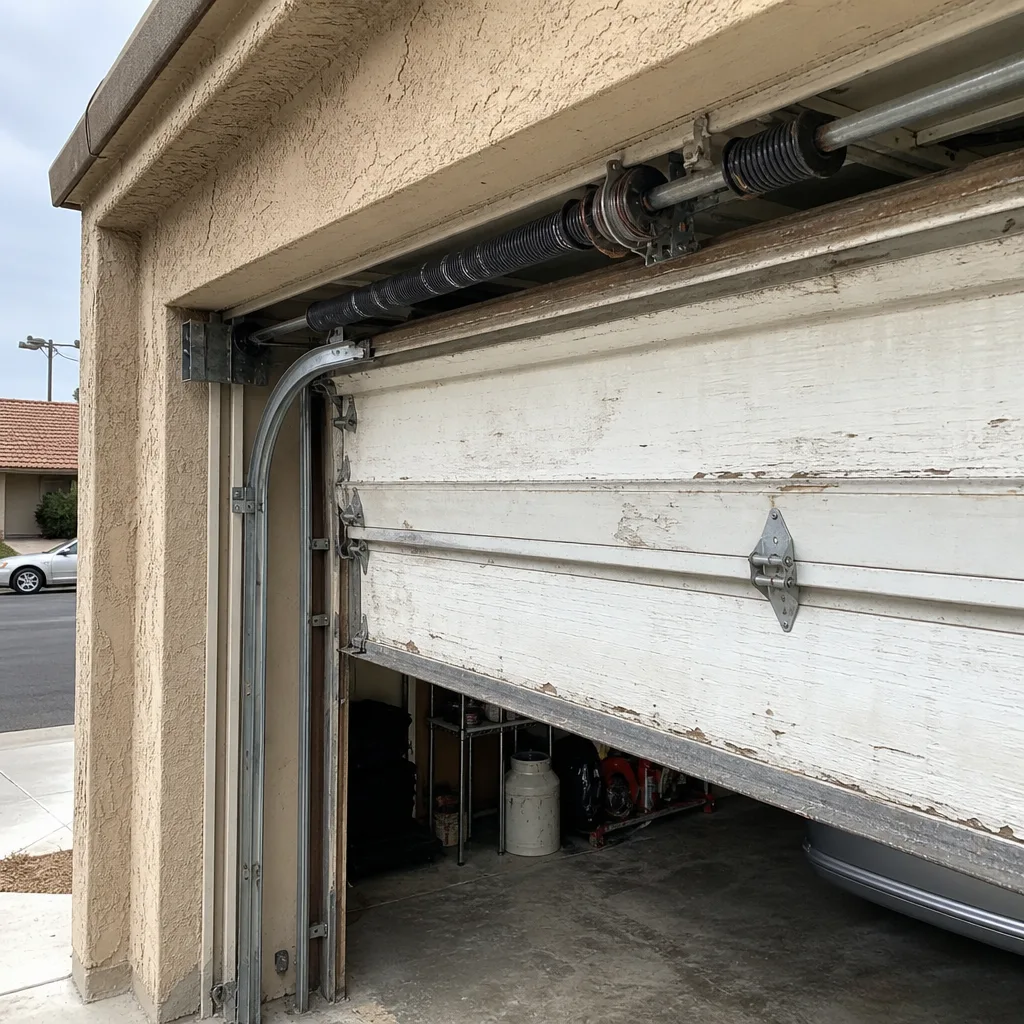 Before
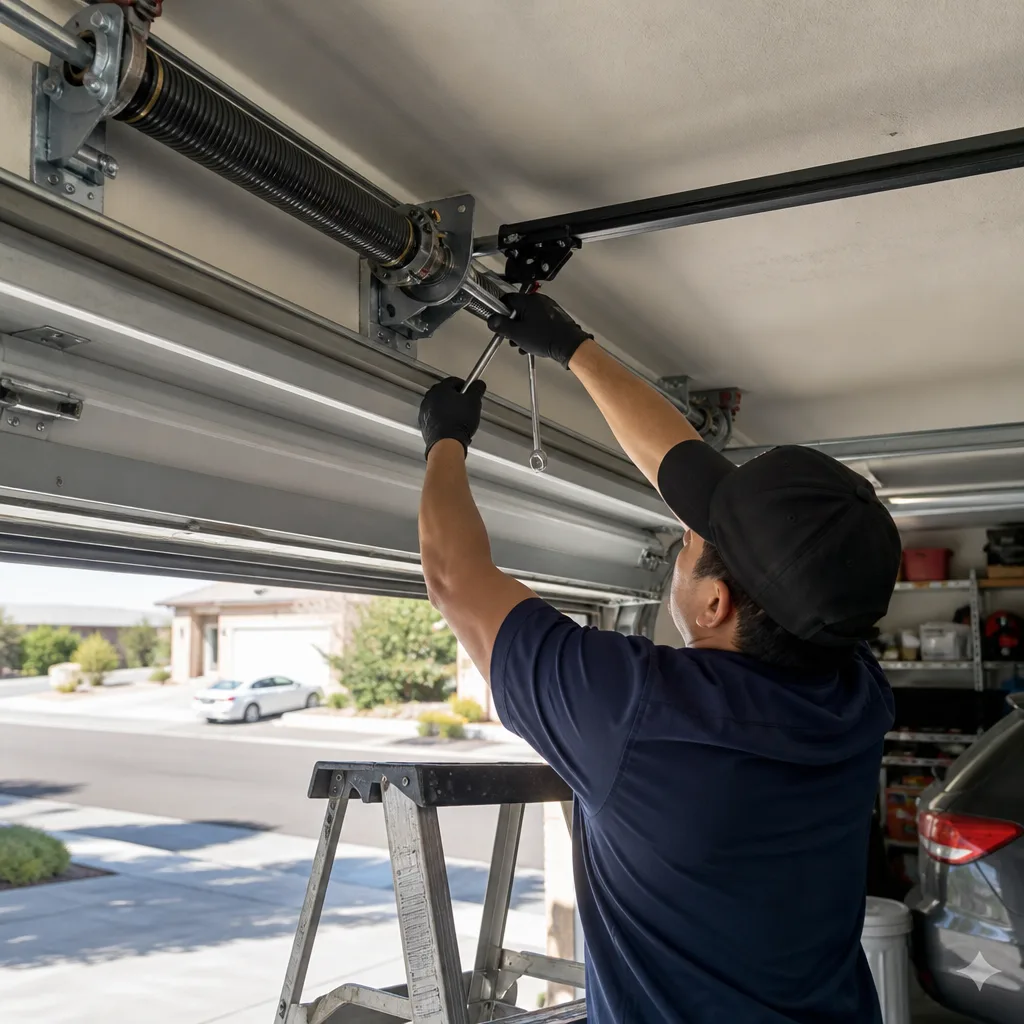 After
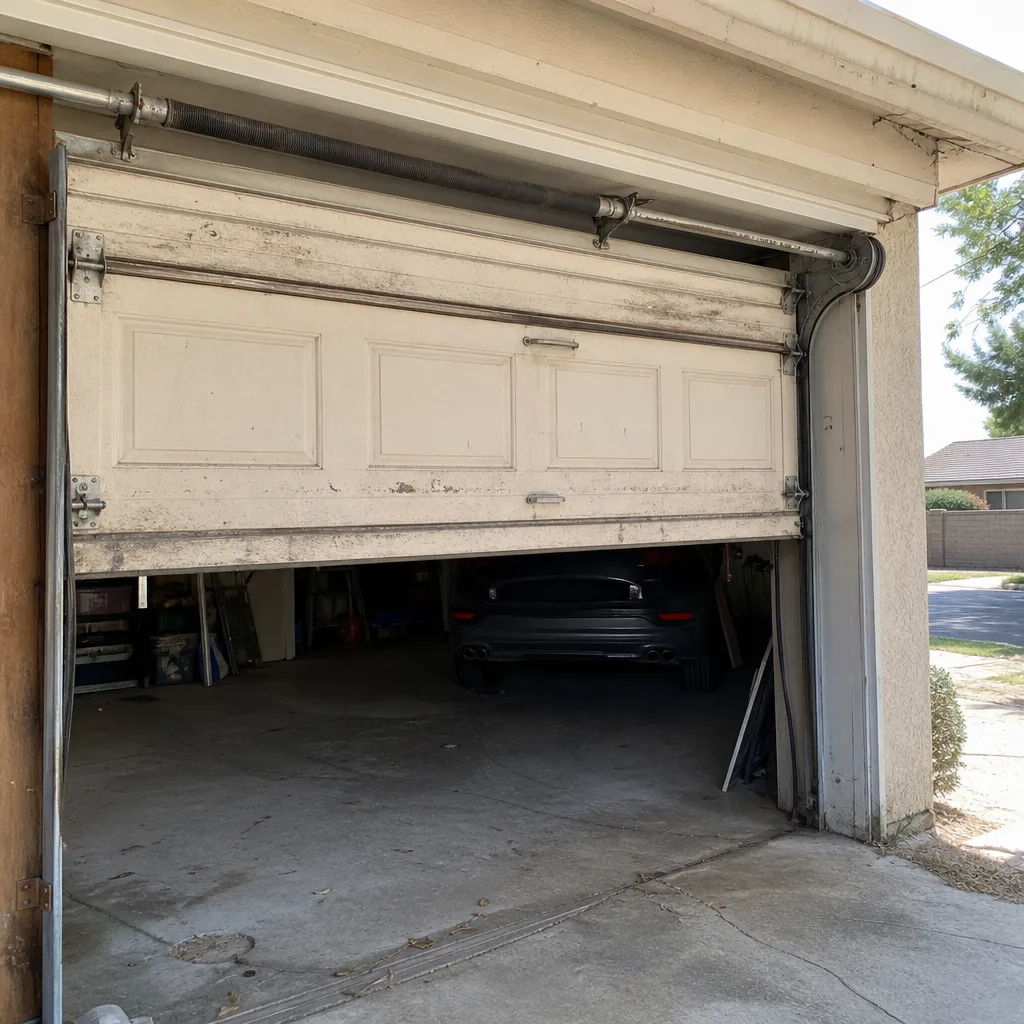 Before
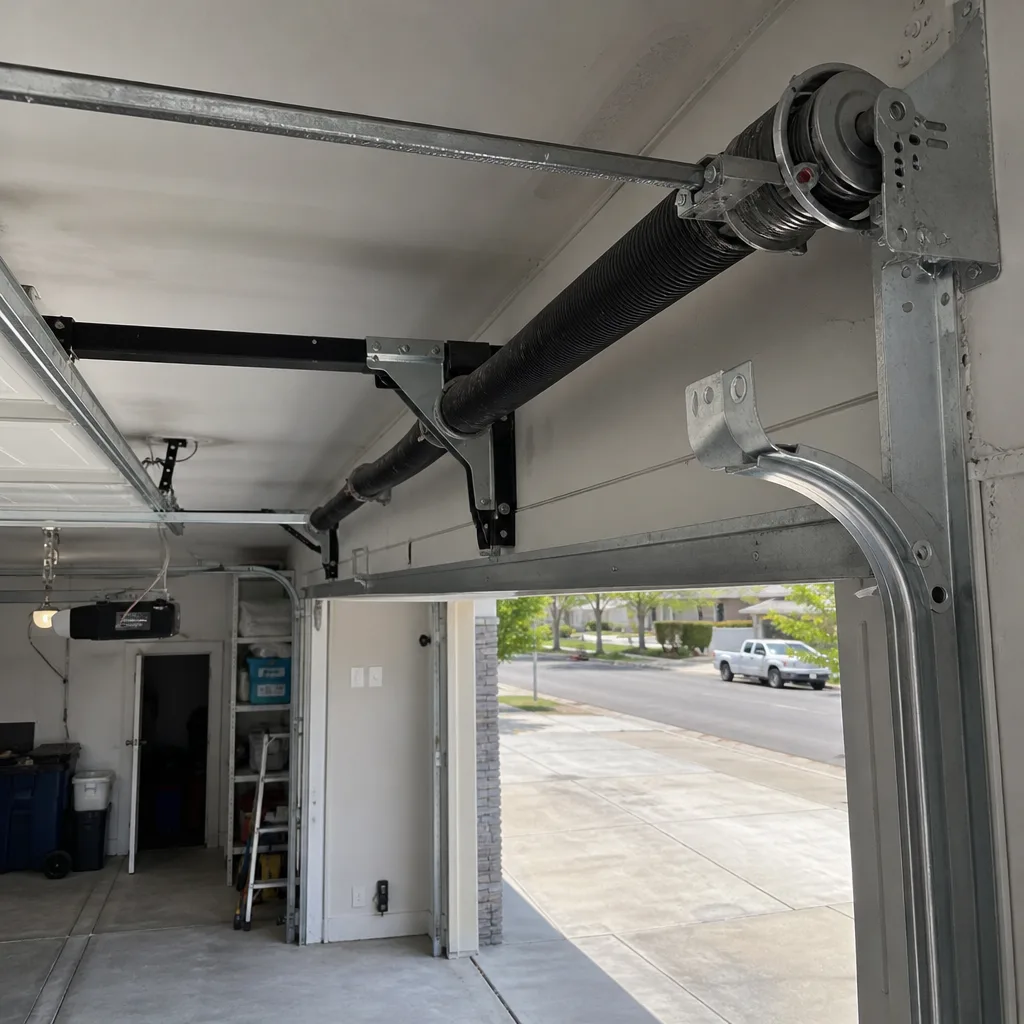 After
When to Call a Professional
You should call a professional when the component in question stores mechanical energy: springs, cables, bottom brackets, or anything connected to them. You should also call when the job requires tool access or working height that exceeds a standard stepladder, when the opener’s force settings need adjustment for safety compliance, or when you’re unsure whether what you’re looking at is safe to touch. If the job involves a full door replacement, that’s always a professional appointment with a written quote. Northgate Garage Door Repair offers free estimates in Beaumont, and we’re happy to inspect a door you’re uncertain about without any obligation to proceed. Call (833) 593-7152 to schedule a look.
Frequently Asked Questions
Single torsion spring replacement in Beaumont typically runs $250 to $450 including labor and the service call, depending on spring size and door weight. Double spring systems run $350 to $650. The parts themselves only cost $40 to $80 per spring, but the danger involved in the replacement is why the labor rate exists. Call (833) 593-7152 for an exact quote on your specific door, and we’ll give you a written price before any work starts.
Yes, you can replace an opener yourself if you’re comfortable with basic electrical work and the opener uses a standard ceiling plug. But the job involves more than swapping the motor unit; you’ll need to adjust the travel limits, set the force settings, and test the auto-reverse function properly. A mistake in the force setting creates a safety hazard, which is why many homeowners prefer to hire garage door opener repair in Beaumont and have it done right the first time.
The torsion spring is the most dangerous component by a wide margin. It’s a tightly coiled steel spring mounted above the door that stores enough energy to break bones if it releases unexpectedly. Lift cables are the second most dangerous, because they’re always under the full weight of the door and a frayed cable can snap without warning.
Yes. Beaumont sits in the San Gorgonio Pass, one of the windiest corridors in Southern California, and sustained winds push against door panels continuously during windy seasons. Over years, this causes panel bowing, accelerated roller wear, and faster seal degradation compared to inland cities like Redlands or Yucaipa. The wind also drives dust into the track and bearings, which is why seasonal cleaning and lubrication matter more in Beaumont than in many nearby communities.
We recommend lubricating your garage door twice a year in Beaumont, once before summer heat peaks and once after the fall wind season. The dry, dusty climate means the lubricant degrades faster than it would in a coastal environment. A twice-a-year schedule with the right product will extend the life of your rollers, hinges, and opener noticeably.
No. In fact, professional repairs often preserve the manufacturer’s warranty, while DIY repairs can void it. Most door manufacturers, including Amarr and Clopay, require that spring and cable work be performed by a qualified technician to maintain warranty coverage. If you’ve done your own spring work and a later failure occurs, the manufacturer may deny a warranty claim on the grounds of improper installation.
The Bottom Line
The DIY-versus-professional decision for garage doors isn’t a question of how handy you are. It’s a question of what happens when the part fails while you’re working on it. Seals, rollers above the bottom fixtures, lubrication, and remote programming fail quietly and safely. Springs, cables, and bottom brackets fail violently. The economics follow the same split: DIY makes sense on the safe stuff where the parts are cheap and the labor is simple. It makes no sense at all on the loaded stuff, where the pro markup is small relative to the risk. A sensible Beaumont homeowner does the seasonal maintenance, calls for the dangerous work, and sleeps fine knowing the door won’t collapse on the car. For more guides & resources on keeping your door running smoothly, explore our blog.
Written by the team at Northgate Garage Door Repair, serving Beaumont since 2015.