
Last updated November 2, 2026
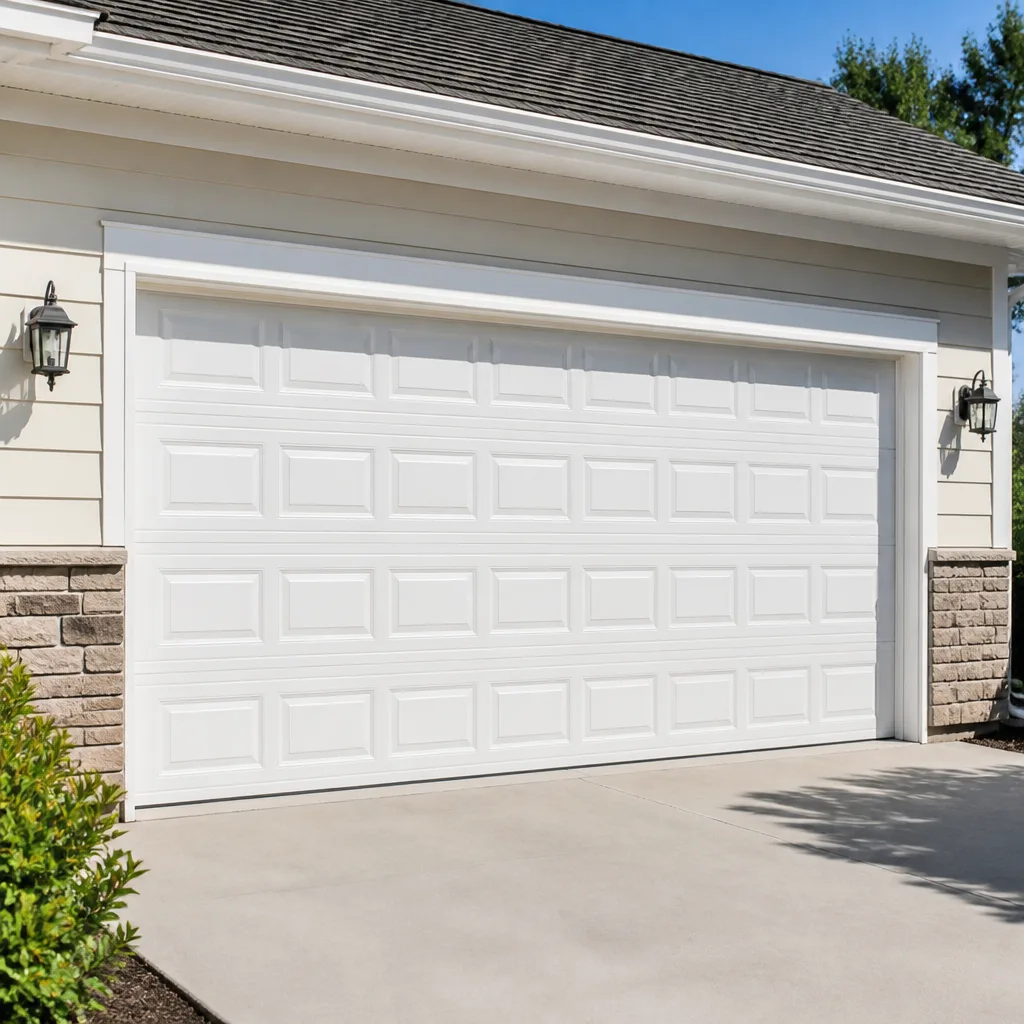 Raised-panel steel
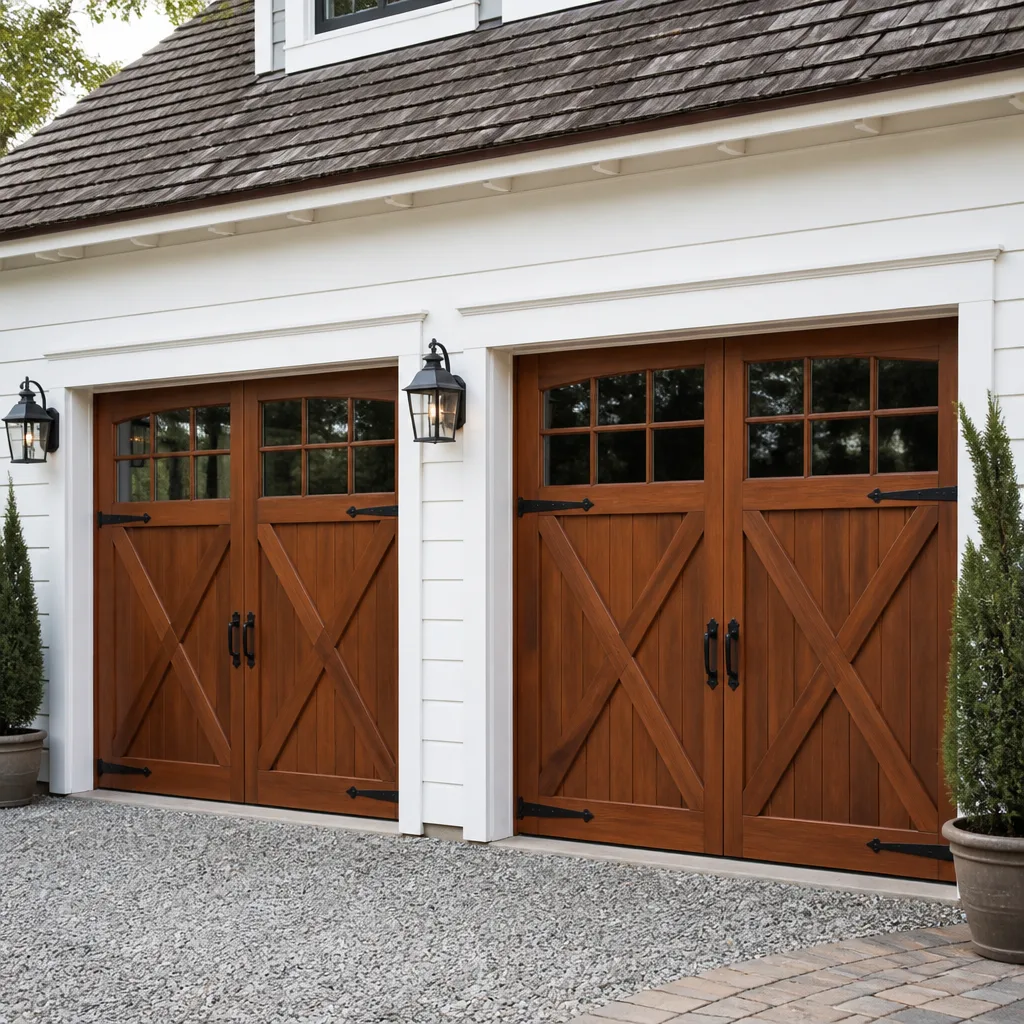 Carriage house
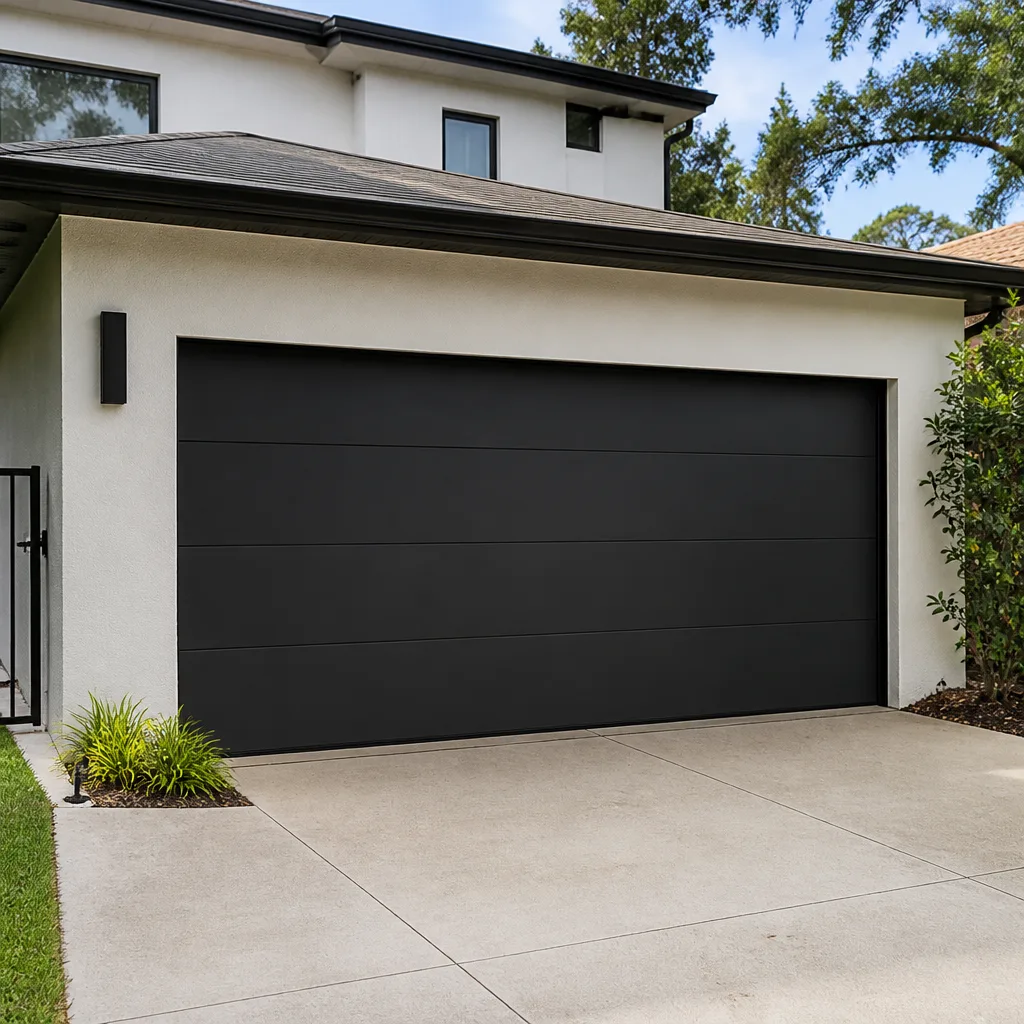 Modern flush
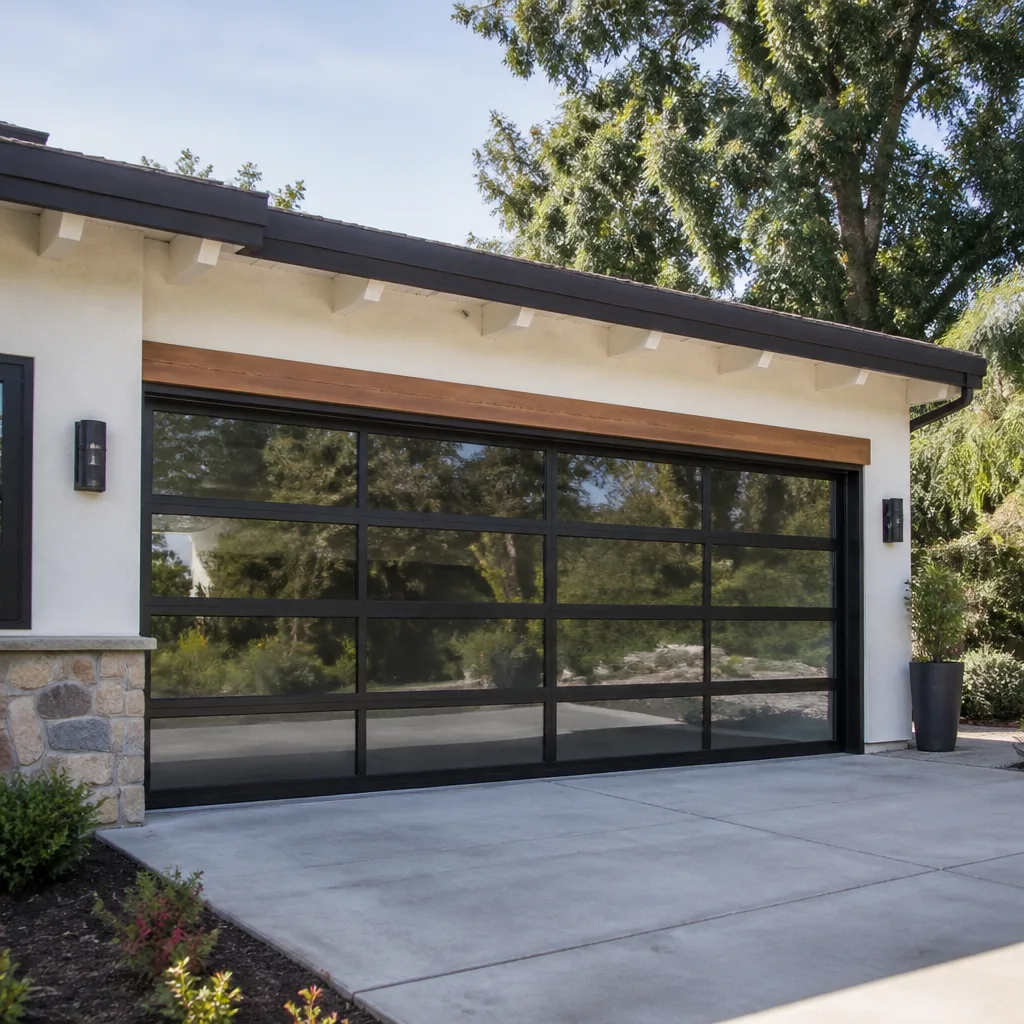 Full-view glass
 LiftMaster openers
 Chamberlain openers
Full 25-point door and opener safety check with every visit - springs, cables, rollers, tracks, and your LiftMaster or Chamberlain opener included
You get a price before we start. It does not change when the truck arrives.
Get your free estimateGarage Door Warning Signs: A Beaumont Homeowner’s Reference Guide
In Beaumont, a garage door cycles open and closed roughly 1,500 times a year. That’s 1,500 opportunities for a small mechanical issue to compound into structural damage. Most homeowners only notice their door when it refuses to open at 6:45 a.m. on a commute day. But the door has been signaling for weeks. A half-second hesitation at the start of travel, a faint metallic tick near the curve of the track, a slight sag you’ve convinced yourself was always there. This guide decodes those signals. You’ll learn which sounds mean nothing, which warnings demand a repair visit this week, and which signs mean stop using the door today. Because in Beaumont, where summer heat regularly pushes past 100 degrees and commuter traffic means some doors cycle six or eight times daily, early detection matters more than in milder climates.
Quick Answer
The most common garage door warning signs in Beaumont are grinding or squealing during travel, a door that hesitates or reverses mid-cycle, visible cable wear or track gaps, sagging sections when partially open, and opener lag of more than one second between wall-button press and motor response. A grinding noise typically indicates worn rollers or bearing failure and costs between $120 and $280 to fix, while a door that sags visibly when half-open often signals spring fatigue, which averages $180 to $340 in the Beaumont market and should be addressed within two weeks before failure strands you outside the garage.
Styles & brands we work with
- Raised-panel steel
- Carriage house
- Modern flush
- Full-view glass
- LiftMaster openers
- Chamberlain openers
Table of Contents
- The Noise Decoder: What Each Sound Actually Means
- Visual Warning Signs You Walk Past Every Day
- Opener Behavior Signals: Lag, Reversal, and Inconsistent Travel
- How Beaumont Heat, Wind, and Commute Cycles Accelerate Failure
- The Triage Framework: Watch, Schedule, or Stop Today
- Age Milestones: What Wears Out at 5, 10, and 15 Years
- The Beaumont Seasonal Pre-Check: 10 Minutes, Twice a Year
- Common Mistakes to Avoid
- When to Call a Professional
- Frequently Asked Questions
The Noise Decoder: What Each Sound Actually Means
A garage door speaks, and most Beaumont homeowners have learned to tune it out. That’s the first problem. The second is misdiagnosing what they do hear. A grinding door is not “just old.” A squealing door is not asking for WD-40. Each sound corresponds to a specific mechanical condition, and the fix varies wildly in cost depending on when you catch it.
Symptom-to-Cause Reference Table
| Sound | What Homeowners Assume | What It Actually Indicates | Typical Beaumont Fix |
|---|---|---|---|
| Grinding (metallic, consistent) | “The door is old” | Worn rollers with flattened bearings, or dry track friction. If rollers are original and the door is 10+ years old, bearing failure is likely. | Roller replacement, $120-$220 |
| Squealing (high-pitched, during travel) | “Needs oil” | Dry roller bearings or hinge pins lacking lubrication. Oil helps temporarily but doesn’t fix a worn bearing race. | Lubrication service or roller replacement, $89-$160 |
| Banging (single, sharp, at start or stop) | “Normal operation” | Loose track bolts, worn hinge rivets, or a door hitting the stops too hard because spring tension is misadjusted. | Tighten hardware or reset spring tension, $95-$180 |
| Clicking (rhythmic, from opener) | “The opener is working” | Gear wear inside the drive unit, or chain slack in Craftsman and older Genie chain-drive models. | Drive gear replacement, $150-$260 |
| Popping (from torsion assembly) | “The door is settling” | Spring coils shifting on the torsion tube. This is a spring-under-load symptom and means the spring is nearing end of life. | Spring replacement, $180-$340 |
We work on the brand you already have. When a Wayne Dalton door in a Sundance neighborhood grinds on the way up, the diagnosis starts with the rollers, not the panel. When an Amarr door in Three Rings Ranch squeals, we check the hinge barrels before anything else. Multi-brand fluency matters here because the noise signatures differ slightly across manufacturers, and a technician who only installs one line will misread them.
Visual Warning Signs You Walk Past Every Day
Beaumont homeowners park in their garage, walk past the door tracks, and never look up. That’s not a character flaw. But the door shows structural warnings long before it fails, and most of them are visible from the driveway during normal use.
What to look at, and what each sign means:
- Cable fraying or separated strands. The lift cables are under constant tension. If you see individual wire strands poking out near the bottom bracket, the cable is unwinding. This is a stop-using-the-door-today condition, not a watch-it situation.
- Track gap or misalignment. The rollers should sit centered in the track channel. If the track has pulled away from the wall brackets or the vertical track leans inward, the door is fighting itself every cycle. In Beaumont, wind loads on west-facing doors accelerate this.
- Sagging when half-open. Disconnect the opener (pull the red release cord) and manually lift the door to waist height. A balanced door stays put. A door whose spring is fatigued drifts downward or feels noticeably heavy.
- Uneven gap at the bottom. When closed, the bottom seal should touch the floor evenly across the full width. A quarter-inch gap on one side means either the floor settled, the track shifted, or the spring tension is uneven.
- Worn or cracked panels at hinge points. Clopay, Amarr, and Wayne Dalton all use steel or composite panels. Cracks radiating from hinge bolt holes indicate the panel is carrying stress it shouldn’t, usually from a spring that’s too strong or too weak.
- Rust at the bottom bracket. Moisture collects at the lowest point of the door. In Beaumont’s dry climate this is less common than coastal areas, but irrigation overspray against garage walls creates the same condition. Rusted brackets crack under load.
None of these signs resolve themselves. A cable that’s fraying today will snap tomorrow or next month. A panel that’s cracked at the hinge will keep cracking until replacement is the only option. The repair-first approach applies here: most visual warnings can be corrected with a hardware refresh, a track realignment, or a spring re-tension, none of which require a new door. For more on what a full repair covers, see our Garage Door Repair in Beaumont service page.
Opener Behavior Signals: Lag, Reversal, and Inconsistent Travel
The opener is the brain of the system. When it behaves inconsistently, homeowners often blame the remote batteries or the wall button. Sometimes that’s right. But opener behavior patterns carry diagnostic information, and reading them correctly saves a service call or prevents a stranding.
Signal 1: Response Lag
Press the wall button. If the motor takes more than one full second to respond, something is wrong. Common causes in Beaumont homes include: a failing capacitor in the opener’s start circuit, worn drive gears in older Craftsman screw-drive units, or a logic board issue in LiftMaster and Chamberlain models affected by heat soak in uninsulated garages. A healthy opener responds almost instantly.
Signal 2: Mid-Cycle Reversal
An opener that reverses after traveling six inches or two feet is usually hitting its force-safety threshold. That threshold exists to prevent crushing a child or pet. The opener senses resistance and reverses. But if the door’s spring is weakening, the door feels heavier, the opener works harder, and the force threshold trips earlier. In Beaumont’s summer, garage temperatures above 110 degrees also cause thermal expansion in the door’s metal components, increasing friction and triggering false reversals. The fix may be spring replacement, not opener replacement. If you’re in the Beaumont area and seeing this, our Garage Door Opener Repair in Beaumont service covers diagnostics on LiftMaster, Chamberlain, Genie, Craftsman, and more.
Signal 3: Inconsistent Travel Limits
If the door sometimes stops three inches short of the floor, then works fine the next day, the travel limit settings are drifting. On older units with mechanical limit screws, vibration loosens them. On newer units with electronic limits, power surges from Beaumont’s summer thunderstorm season can reset the logic board. Either way, an opener that can’t consistently close the door leaves a security gap and lets hot air into the garage.
Signal 4: Phantom Operation
A door that opens on its own, or a light that turns on randomly, indicates signal interference or a failing logic board. In Beaumont, where newer neighborhoods like Fairway Canyon run dense wireless networks, interference from neighboring openers, baby monitors, or mesh Wi-Fi systems can trigger phantom operation on older units with fixed-code receivers. If you have a Craftsman or Genie opener from before 2005, upgrading the receiver or the entire drive unit may be the fix.
How Beaumont Heat, Wind, and Commute Cycles Accelerate Failure
Beaumont is not like Riverside or Redlands when it comes to garage door wear. Three local factors change the failure timeline in ways that generic garage-door advice never accounts for.
Factor 1: Heat Expansion and Metal Fatigue
Beaumont regularly exceeds 100 degrees from June through September. Steel garage doors expand when heated. Torsion springs, which are themselves steel, also expand. A spring that’s marginal in winter becomes a problem in summer because the expansion changes the effective tension. Track bolts that are slightly loose get looser as the metal around them cycles through 30-degree day-night swings. Homeowners in Sundance and Three Rings Ranch report more cable and spring failures in July and August than any other months, and the heat is the primary accelerant.
Factor 2: Wind Stress on West-Facing Doors
Beaumont sits in a wind corridor. The same wind that makes the pass feel cool in the evening pushes against the broad face of a garage door all afternoon. A 16-foot-wide door is a 128-square-foot sail. Wind pressure flexes the panels, stresses the track brackets, and forces the rollers into the track walls unevenly. West-facing doors take the worst of it. Homeowners with west-facing garages should check track bracket bolts seasonally and listen for new rattles after high-wind events.
Factor 3: High Cycle Count from Commuting
Beaumont to Redlands is 15 miles. Beaumont to Ontario is 45. Beaumont to Riverside is 25. Many Beaumont residents commute to the Inland Empire’s job centers daily, and a two-car household might open or close the garage door six to ten times a day. Standard torsion springs are rated for 10,000 cycles. A door cycling ten times daily hits that number in under three years. High-cycle springs, rated for 20,000 to 30,000 cycles, cost about 30% more but last three times as long. If your household cycles the door heavily, specifying high-cycle springs at replacement is the single most cost-effective upgrade a Beaumont homeowner can make.
The Triage Framework: Watch, Schedule, or Stop Today
Not every warning sign is an emergency. Not every quiet door is healthy. Here is the framework we use with Beaumont customers to sort observations into action.
- Watch it. A faint squeak that appears on cool mornings and disappears by noon. A door that’s slightly slower than it was a year ago. A remote that needs two presses occasionally. These are early-stage signals. Note them. Monitor them. Check again in a month.
- Schedule service this week. A grinding noise that’s present on every cycle. A visible gap in the track. A door that sags when half-open but still opens and closes. Worn or cracked panels at hinge points. Cable that looks fuzzy but hasn’t separated. These conditions are declining but not yet dangerous. Repairing them now costs less than the emergency version of the same problem.
- Stop using the door today. A snapped or visibly separated cable strand. A popping sound from the spring assembly. A door that jerks violently during travel. A track that’s visibly bent or pulled from the wall. A door that dropped suddenly when last closed. In these states, the door can fail catastrophically at any moment. Leave it closed (or open), pull the release cord to disengage the opener, and call a technician before using the door again.
This framework reflects a repair-first philosophy. Most Watch-it and Schedule-this-week items are fixable without replacing the door. The $150 roller replacement is the difference between a working door and a $900 emergency service. For a deeper look at what repair involves and what it costs, visit Northgate Garage Door Repair home for full service details.
Age Milestones: What Wears Out at 5, 10, and 15 Years
Garage door components age on predictable schedules. Knowing the timeline helps Beaumont homeowners budget and anticipate. Here’s what fails, and when.
Year 1-5: Minor Hardware and Opener Batteries
In the first five years, the door itself should be trouble-free if it was installed correctly. What wears first: remote batteries (1-2 years), safety sensor alignment (drifts with vibration), and lubrication (dries out in Beaumont’s heat). If a Clopay or Amarr door is grinding in year three, the issue is usually dry rollers or hinges from under-lubrication, not parts failure. A five-minute lubrication service once a year extends roller life significantly.
Year 5-10: Rollers, Hinges, and Opener Drive Components
This is the most common service window we see across Beaumont. Door rollers, especially nylon rollers with steel bearings, wear out between years five and eight. Hinge rivets loosen. Opener drive gears, particularly in Craftsman and older Chamberlain chain-drive models, strip between years seven and ten. The door itself is usually still structurally sound. A comprehensive hardware refresh in this window, $200 to $350 for most doors, can add five to seven years of life to the system.
Year 10-15: Springs and Cables
Torsion springs are the hardest-working component in the system. In a high-cycle Beaumont home, the original springs may be done by year eight. In a low-cycle household, they might reach year twelve. Cables typically fail within a year or two of spring replacement if not replaced together. At year fifteen, panels on a Wayne Dalton or Amarr door may show rust-through at the bottom edge, and the opener’s logic board may be obsolete. At this stage, repair is still possible, but full Garage Door Installation in Beaumont becomes a legitimate financial comparison.
The Beaumont Seasonal Pre-Check: 10 Minutes, Twice a Year
Twice a year, in early May (before the heat peaks) and early November (after the first Santa Ana events), run this ten-minute inspection. It requires no tools beyond your eyes, ears, and a willingness to look closely.
- Listen to one full open-close cycle. Stand inside the garage, near the door center. Note any grinding, squealing, popping, or clicking. If the door was silent last season and is noisy now, something changed.
- Watch the door travel. Does it move smoothly, or does it hesitate at the start? Does either side lag? A door that lifts unevenly has a track, cable, or spring problem.
- Look at the cables. Both sides. Run your eyes along the full length from bottom bracket to drum. Any fuzz, separation, or rust means replacement is due.
- Check the track brackets. Each bracket where the track meets the wall should be tight. In Beaumont’s wind, these loosen over time. Tighten with a socket wrench or call for service if they’re pulling out.
- Test the balance. Pull the release cord and move the door to waist height. It should hold position. If it drops, the springs are failing.
- Inspect the bottom seal. The rubber strip along the bottom edge degrades in heat and sun. A cracked or flattened seal lets summer heat and winter dust into the garage.
We’ve run variations of this checklist with hundreds of Beaumont homeowners. The pattern is consistent: people who check twice a year catch roller and hinge problems early. People who check only when the door fails often face a replacement they could have avoided. For a hands-on inspection with a multi-brand technician, we offer free estimates on Garage Door Repair in Beaumont service calls.
Common Mistakes to Avoid
- Lubricating a grinding roller instead of replacing it. Grease and spray lubricants quiet a failing bearing for a week, then the grinding returns worse than before because the lubricant has trapped grit. Replace worn rollers; lubricate only smooth-operating hardware.
- Ignoring a sagging door because “it still closes.” A door that sags at half-open is being carried by the opener, not the springs. That forces the opener to work as a load-bearing device, which it wasn’t designed for. Opener replacement is more expensive than spring replacement.
- Waiting for a cable to snap before calling. Frayed cables are unambiguously dangerous. They snap without warning, and a snapped cable can whip with enough force to damage a car or injure a person.
- DIY-ing spring replacement. We understand the urge. But torsion springs are under hundreds of pounds of tension. A mistake on the winding bar sends the bar flying. This is one repair where the professional service call is not optional. In our experience, the DIY spring-replacement calls that end badly cost more in medical bills than the spring service would have cost.
- Replacing the whole door when only the hardware is worn. A twenty-year-old steel door with worn rollers and a tired opener is not automatically a replacement job. If the panels are straight and the door is balanced once springs are replaced, it has another decade of life.
- Using generic parts on a brand-specific door. A Wayne Dalton door takes Wayne Dalton-compatible rollers and hinges. A Clopay door has specific track profiles. Generic rollers from a big-box store may fit loosely, speed up wear, and void the door’s remaining warranty.
When to Call a Professional
The line between “monitor it” and “call someone” is crossed when any of these conditions appears: a grinding noise on every cycle, visible cable wear, a door that sags or drops when disconnected from the opener, a track that’s separated from the wall, repeated mid-cycle reversal, or a banging sound at the start or finish of travel. Each of these involves components under tension or load, and each gets more expensive the longer it waits. If you’re unsure, a diagnostic visit is the low-risk option. Northgate Garage Door Repair offers free estimates in Beaumont, and our technicians are certified across eight major brands: LiftMaster, Chamberlain, Genie, Clopay, Amarr, Wayne Dalton, Craftsman, and Raynor. We work on the brand you already have. That matters when the right diagnosis depends on knowing how a specific manufacturer’s door behaves under Beaumont conditions. Call (833) 593-7152 to schedule a diagnostic visit, and we’ll tell you honestly whether the door needs attention now or can wait.
Frequently Asked Questions
Spring repair in Beaumont typically costs between $180 and $340 depending on whether one or both springs are replaced, the spring’s cycle rating, and the door’s weight. High-cycle springs, which we recommend for Beaumont commuters who cycle their doors eight to ten times daily, run slightly higher but last three times as long. Every repair quote is confirmed and agreed before any work starts. Call (833) 593-7152 for a free estimate.
Yes. Most roller, hinge, cable, and spring repairs are completed in a single visit. We carry common replacement parts for LiftMaster, Chamberlain, Genie, Clopay, Amarr, Wayne Dalton, Craftsman, and Raynor systems on the truck, which means the most frequent repairs don’t require a follow-up appointment. Call (833) 593-7152 in the morning and we can typically have a technician in Beaumont the same day.
No. We diagnose the problem, explain what’s needed, and quote a firm price before any work starts. If additional issues are found during the repair that change the scope, we pause and get your approval before proceeding. You’ll never see a larger invoice than the number you agreed to.
Our trucks are stocked with rollers, hinges, cables, springs, safety sensors, and opener components compatible with the eight major brands we service: LiftMaster, Chamberlain, Genie, Clopay, Amarr, Wayne Dalton, Craftsman, and Raynor. For less common or newly released models, parts are usually available same-day or next-day from local distributors.
Heat expansion changes the clearance between metal components. Tracks that were quiet in April can grind in August because the steel has expanded, reducing roller clearance. Metal-to-metal contact in hinges and brackets also increases as components expand. The fix is often a simple track adjustment and roller lubrication, not a full repair. If the noise is present year-round, that’s a different issue and worth a diagnostic visit.
It depends on the noise. A squeal from dry bearings is annoying but not dangerous. A popping sound from the spring assembly, a banging at the start or stop of travel, or a grinding that’s accompanied by visible metal shavings on the track indicates a component under load that may be close to failure. When in doubt, treat new or changing noises as warning signals and get a diagnostic check. The inspection is free on repair calls in Beaumont.
The Bottom Line
Beaumont’s garage doors work harder than most: heat expansion in summer, wind stress year-round, and commute-driven cycle counts that would exhaust a standard spring in under three years. The door signals its decline long before it fails. Grinding means worn rollers. Sagging means tired springs. Reversing means the opener is straining against a door it shouldn’t have to carry. A homeowner who reads these signs correctly spends $150 on rollers instead of $900 on an emergency repair. A homeowner who waits gets stuck outside the garage on a 105-degree day. Check your door twice a year. Listen to it once in a while. And when the signals say service, call someone who works on the brand you already have. Garage Door Opener Repair in Beaumont is our most-called service, and it starts with one phone call to (833) 593-7152.
Written by the team at Northgate Garage Door Repair, serving Beaumont since 2015.
See the difference
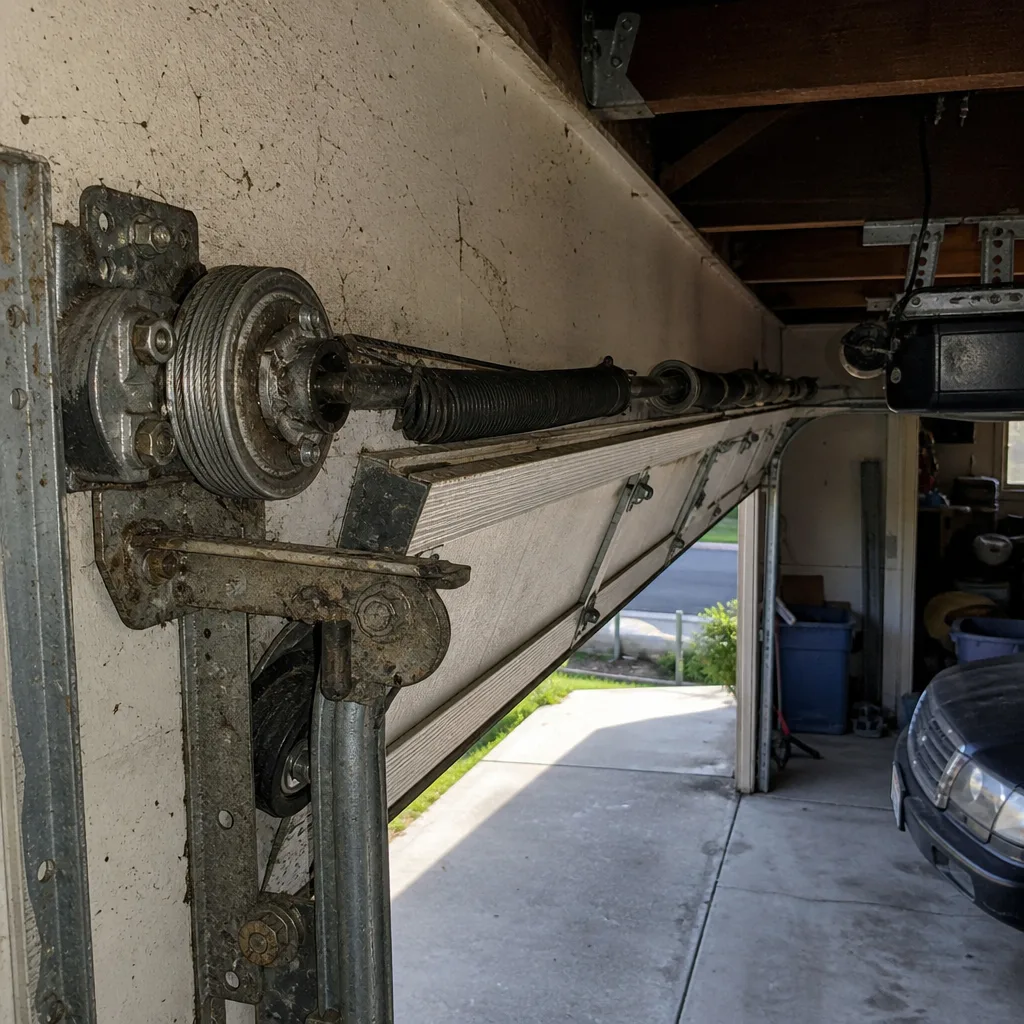 Before
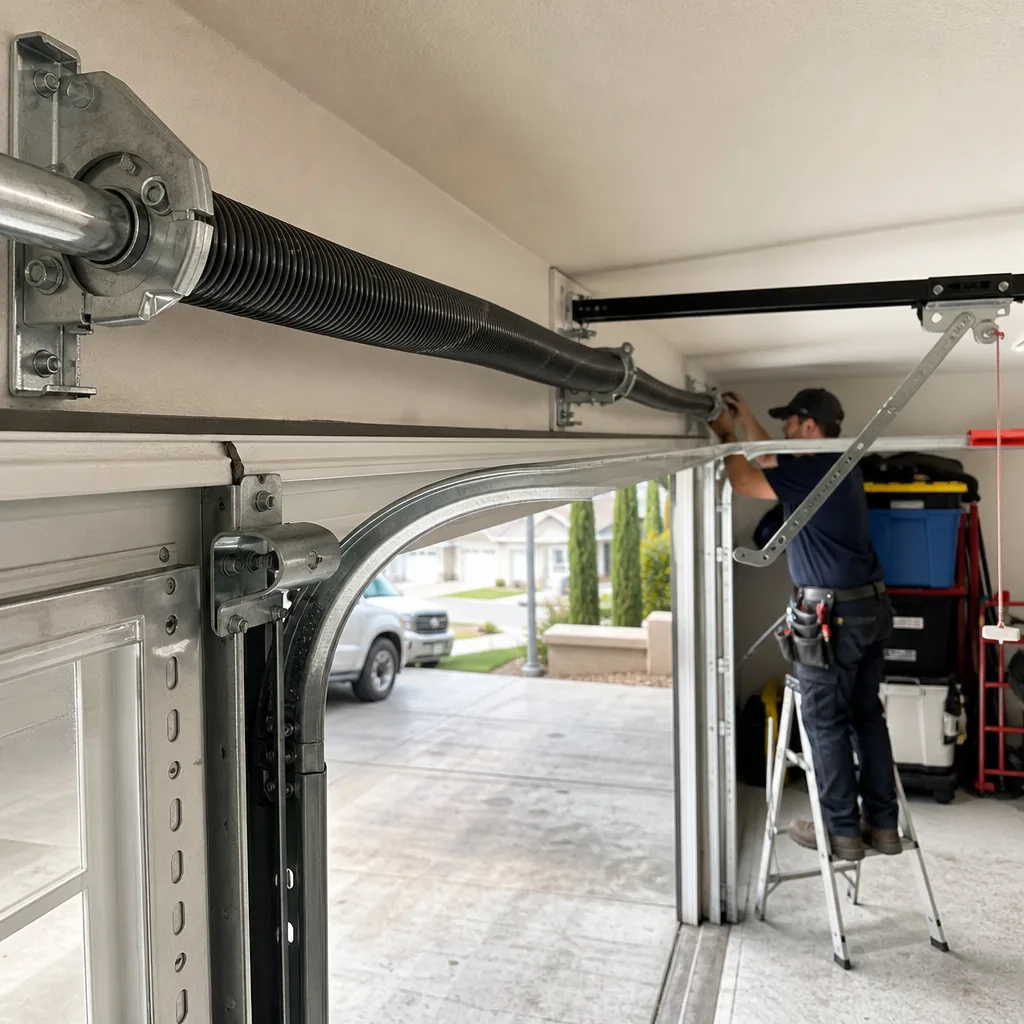 After
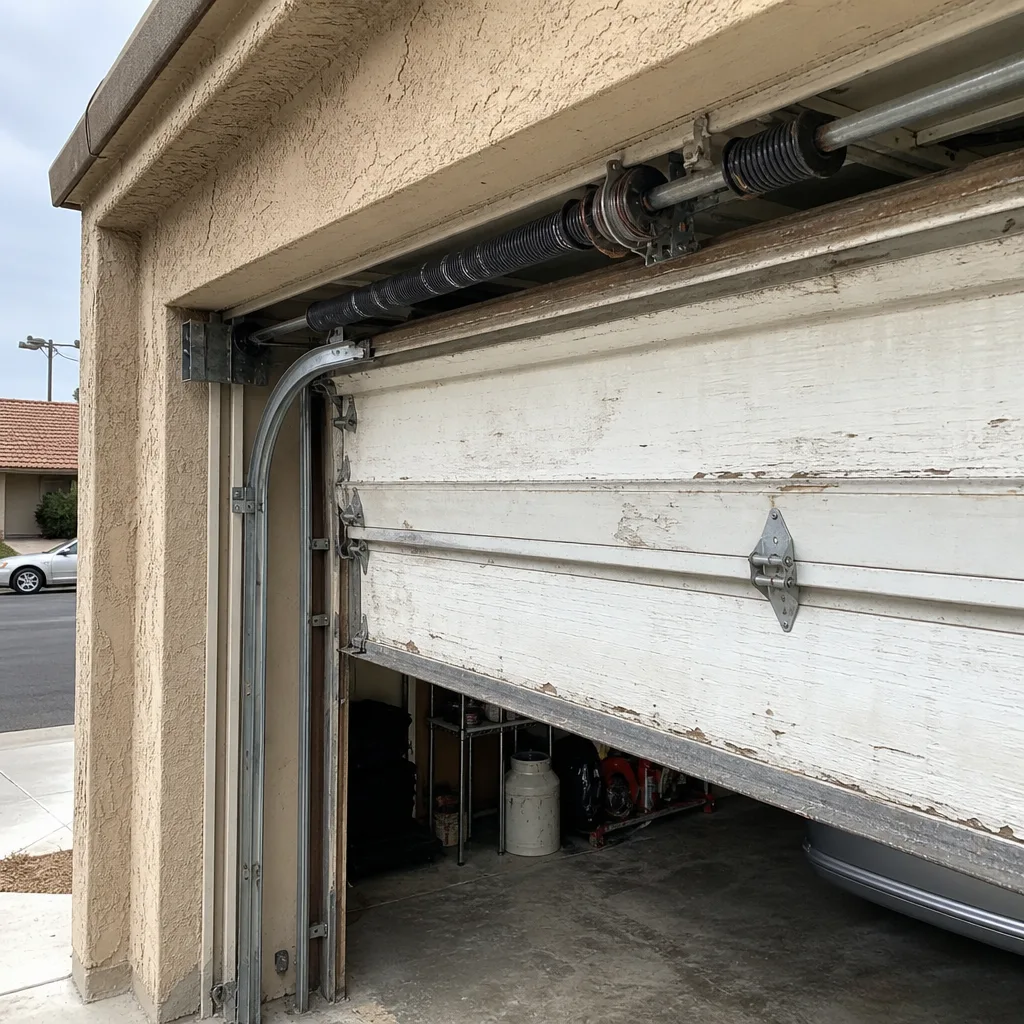 Before
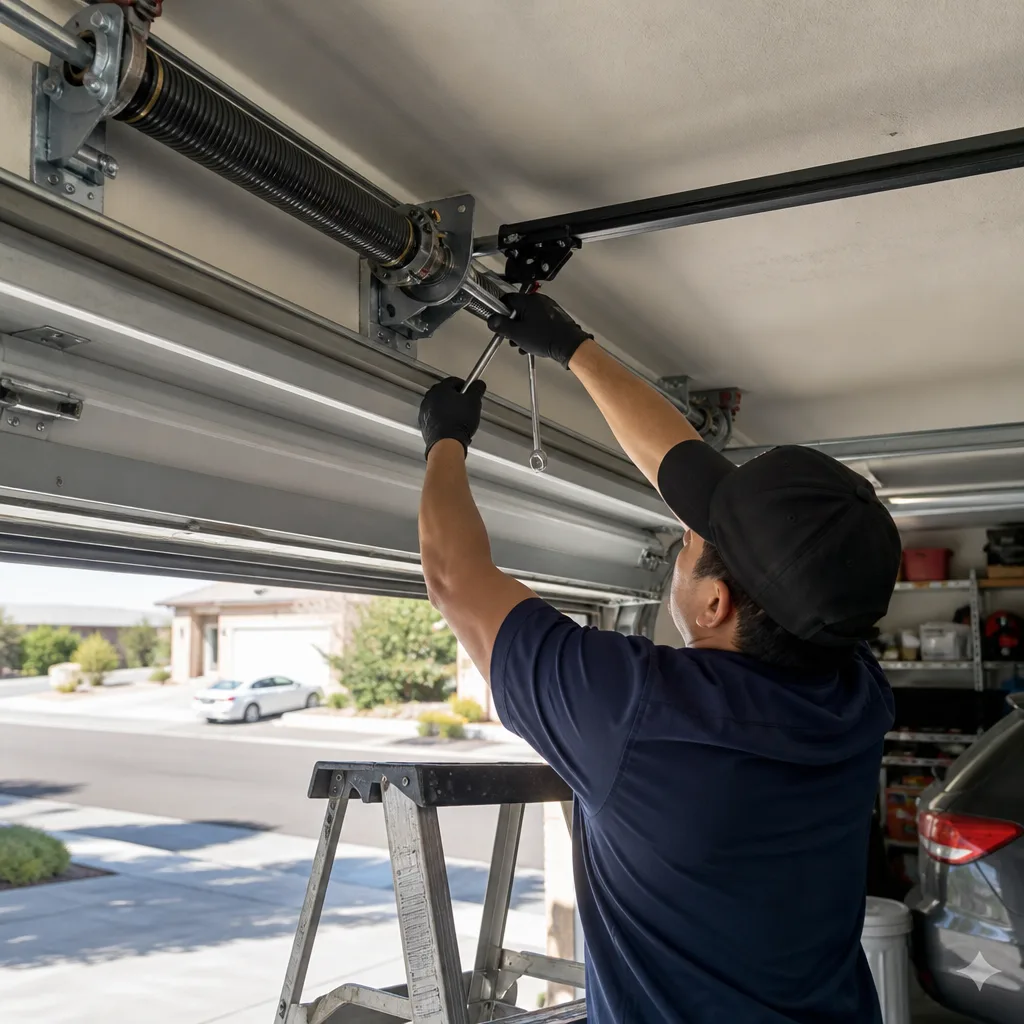 After
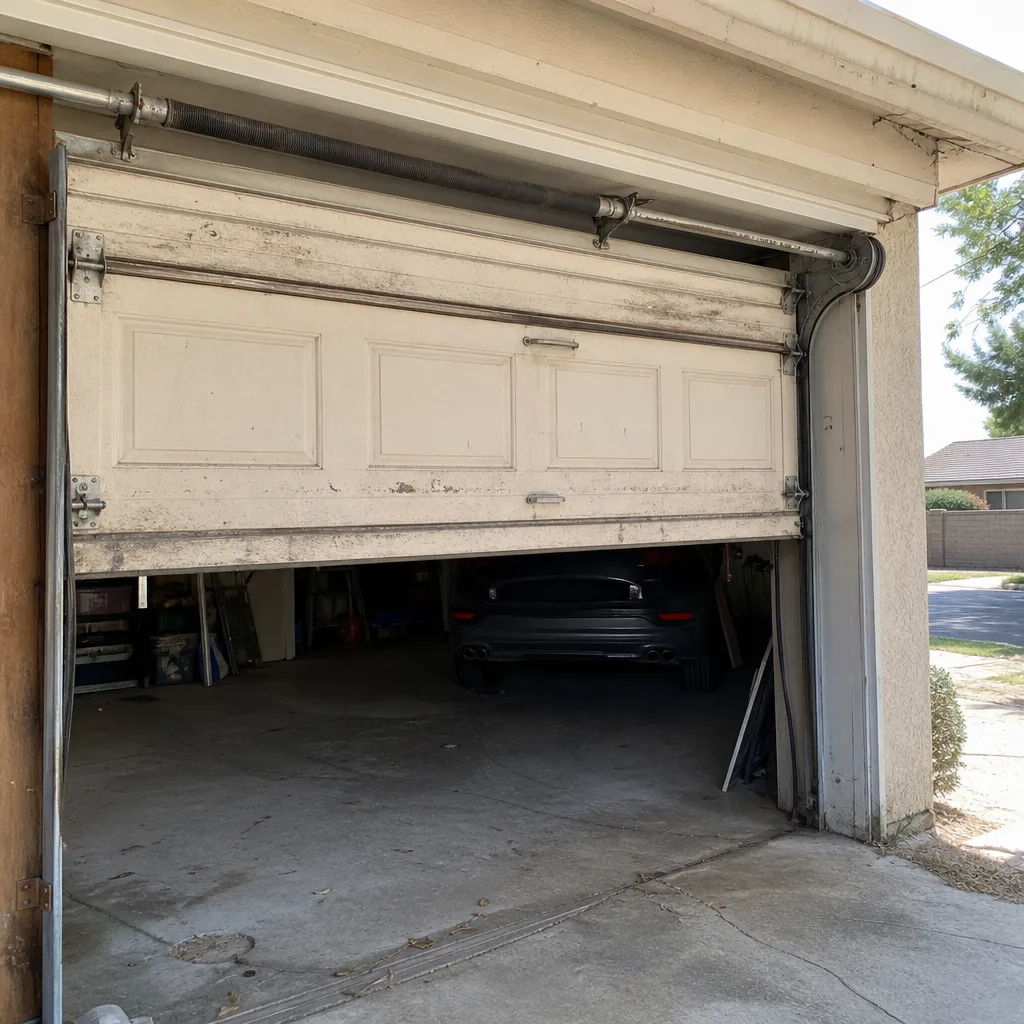 Before
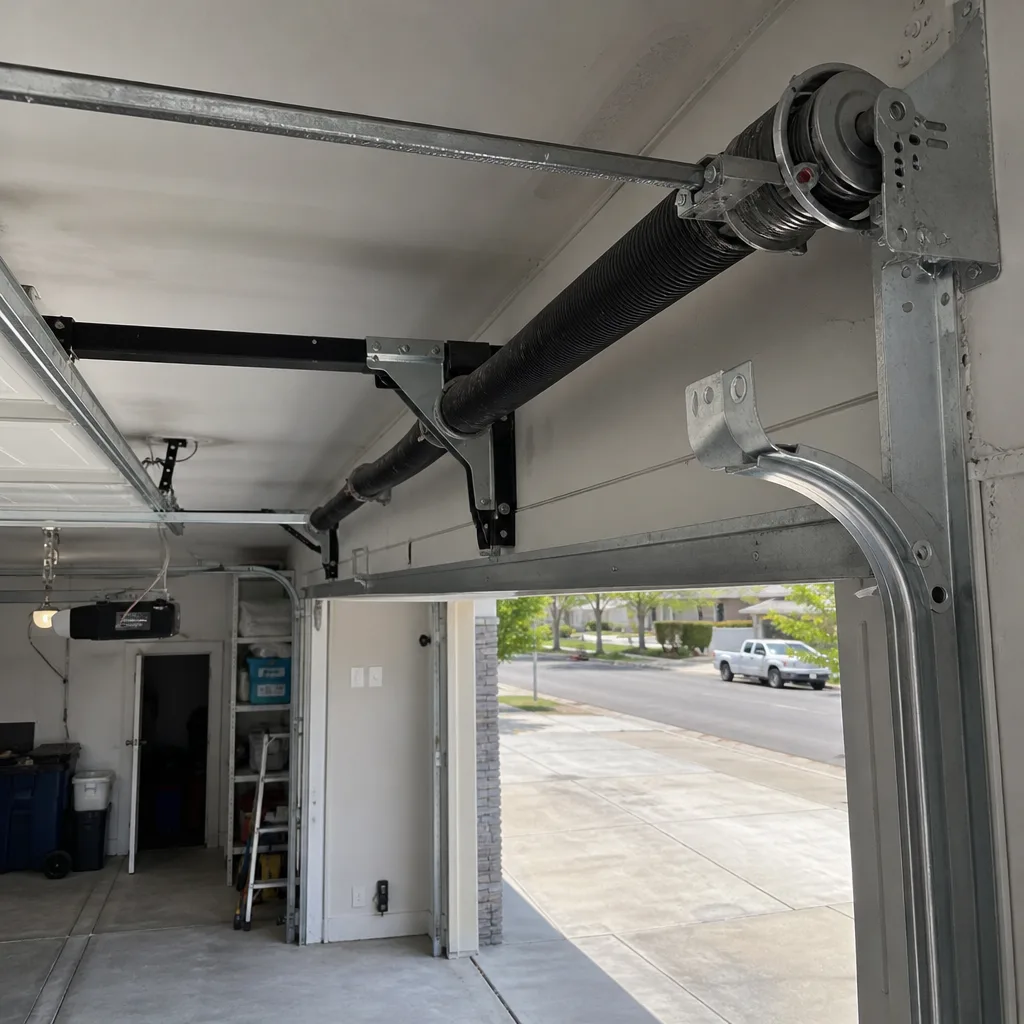 After