
Last updated November 3, 2026
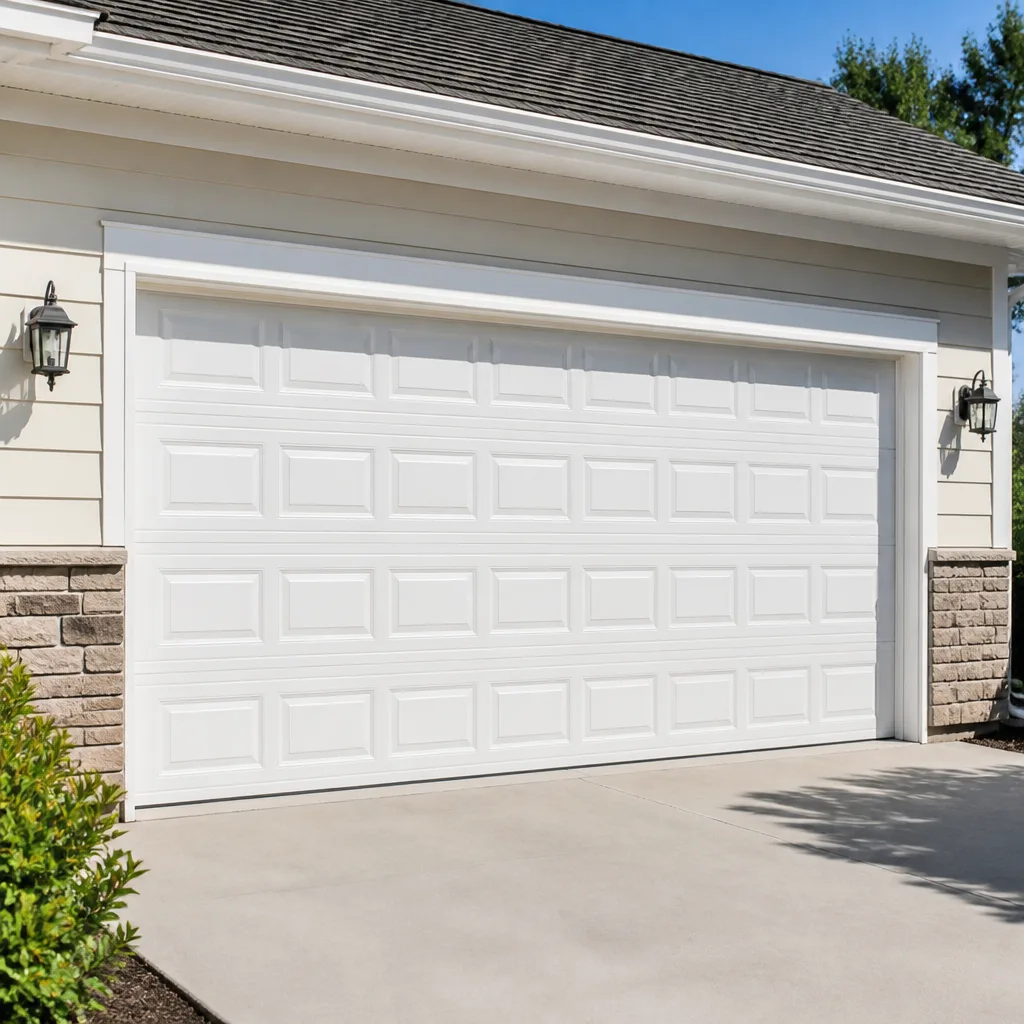 Raised-panel steel
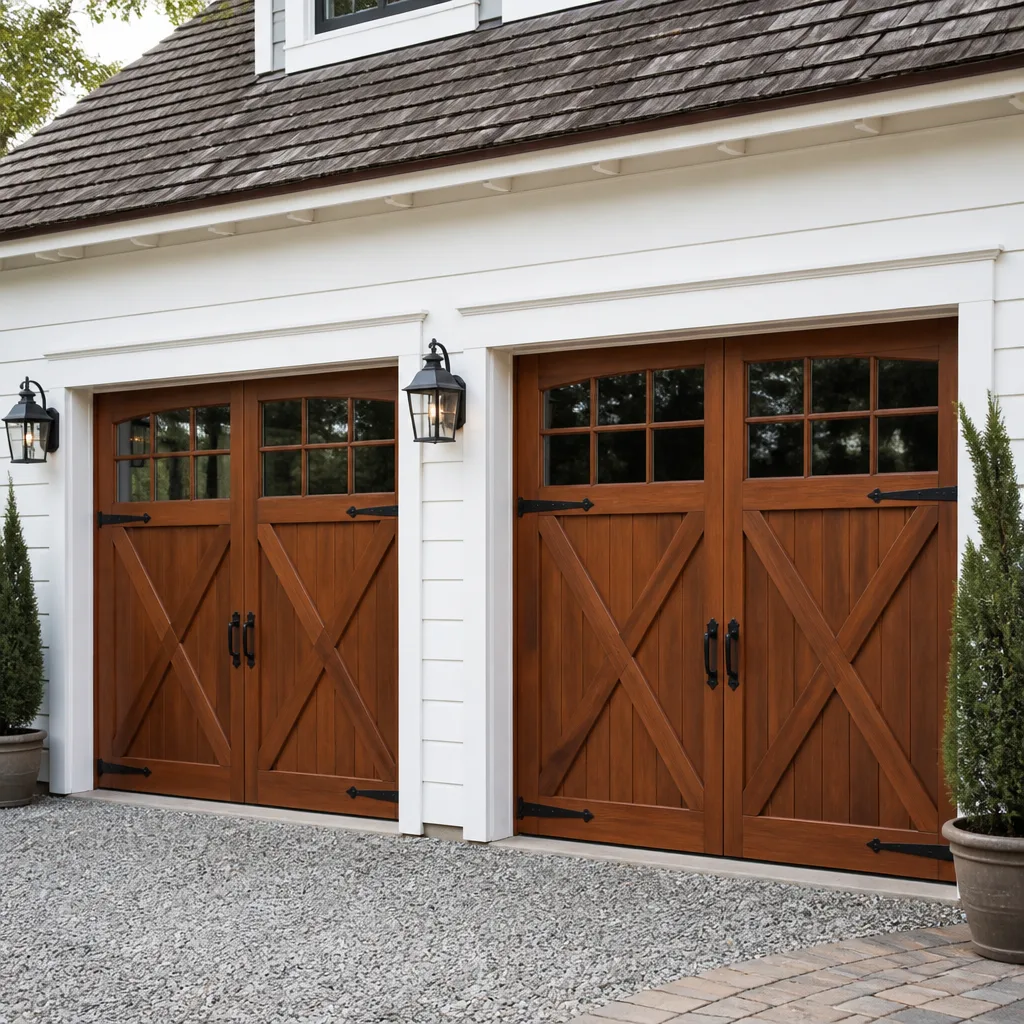 Carriage house
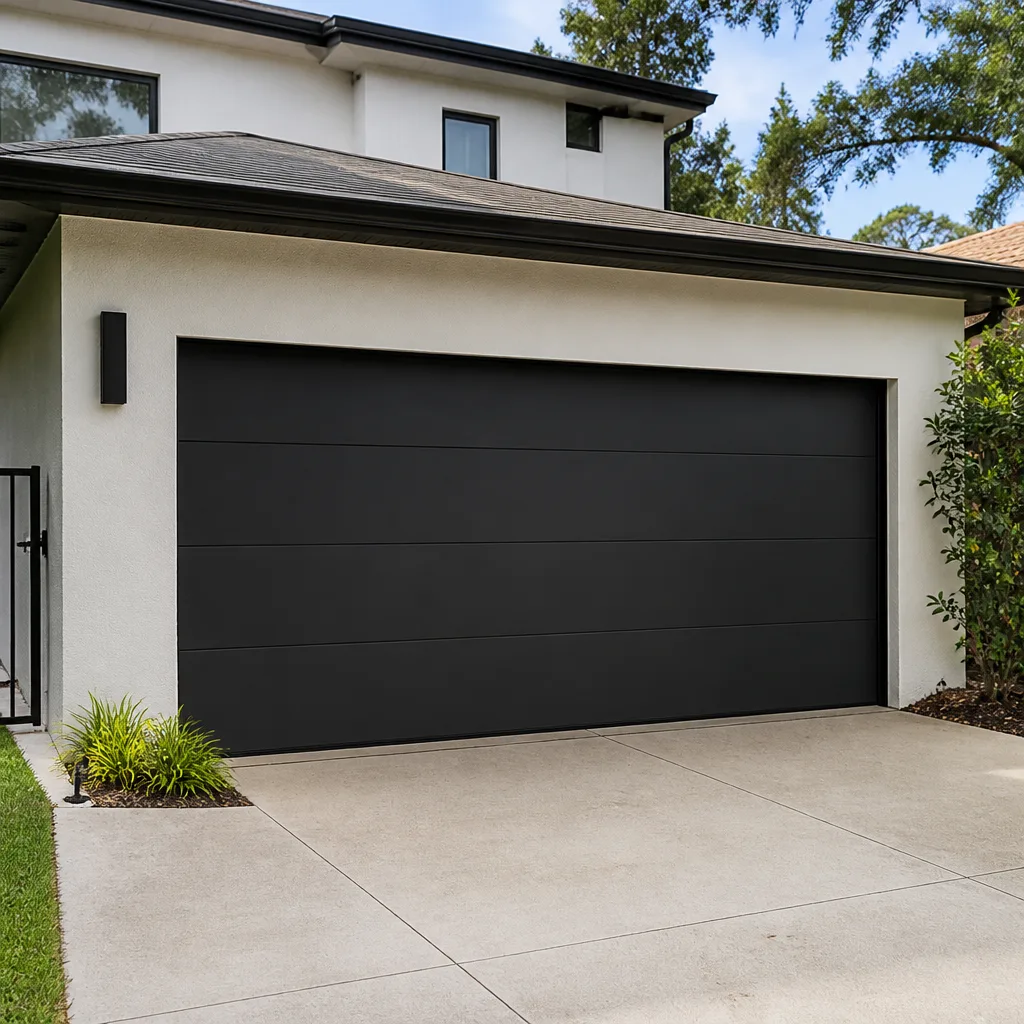 Modern flush
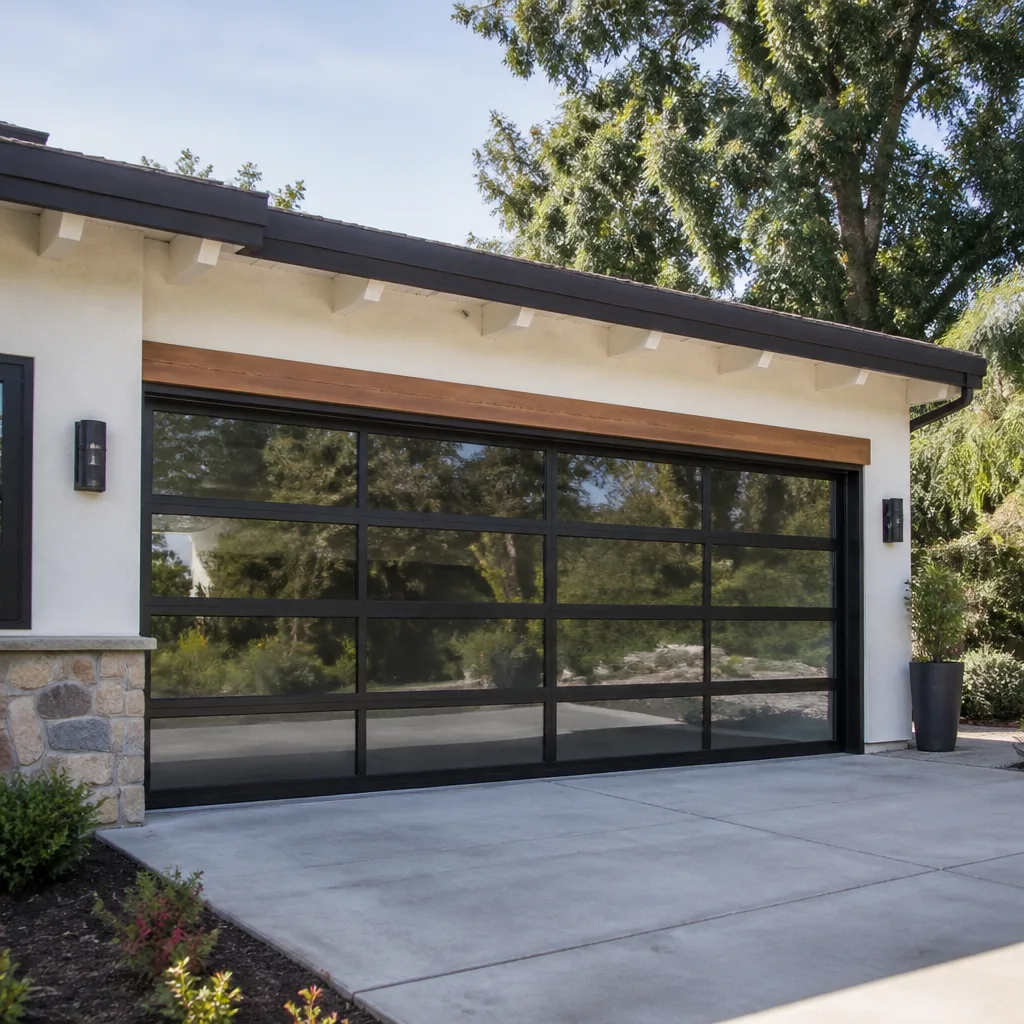 Full-view glass
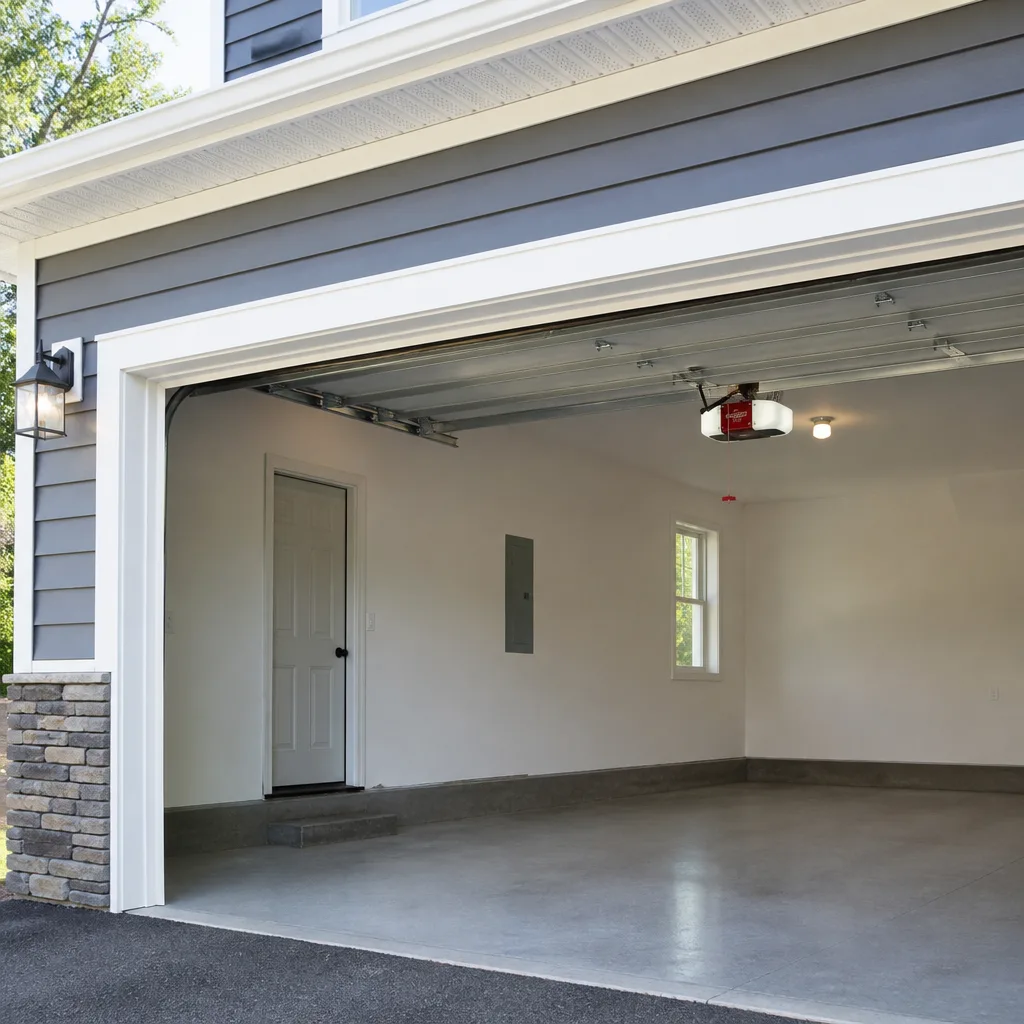 LiftMaster openers
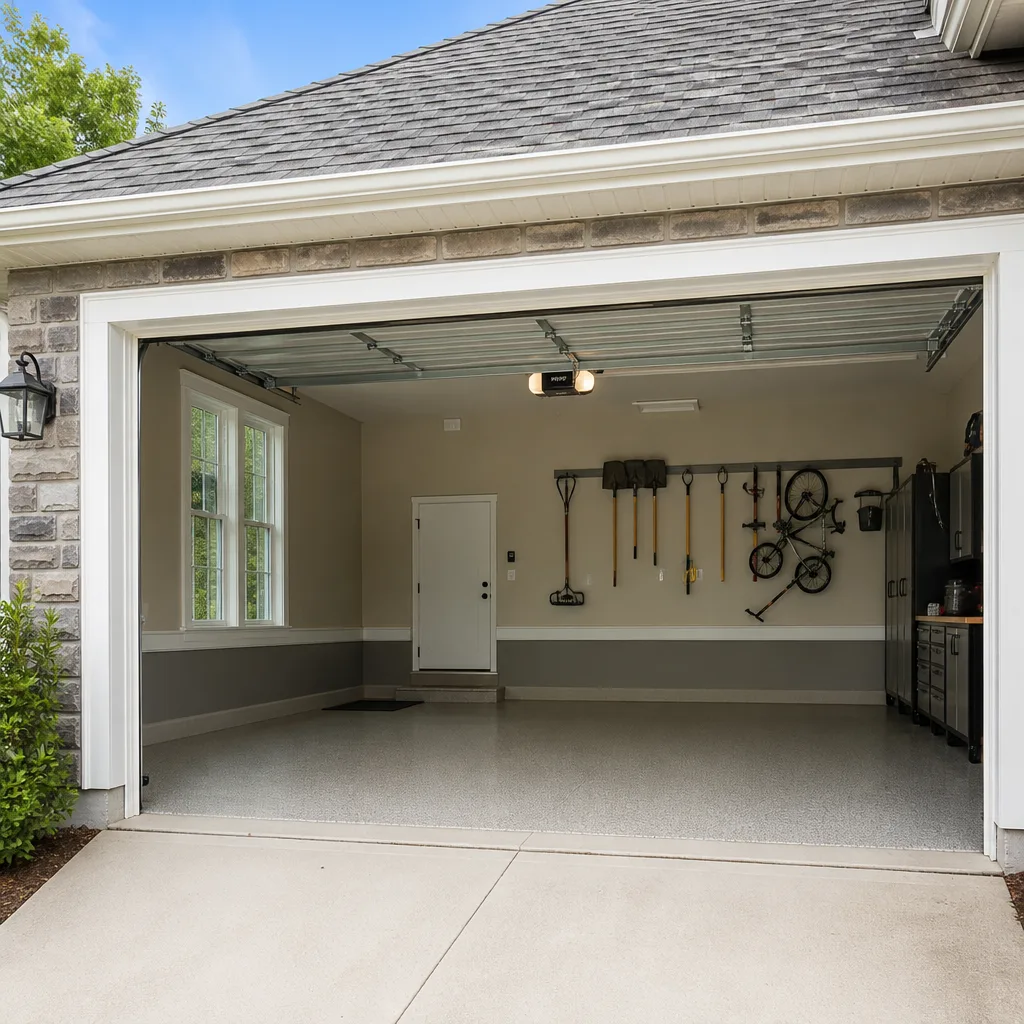 Chamberlain openers
Full 25-point door and opener safety check with every visit - springs, cables, rollers, tracks, and your LiftMaster or Chamberlain opener included
You get a price before we start. It does not change when the truck arrives.
Get your free estimateThe Complete Garage Door Repair Guide for Beaumont Homeowners
Inland Empire summer heat can push a garage interior past 130°F. That single number explains more about garage door failures in Beaumont than any owner’s manual ever will. It warps bottom seals, bakes the grease out of torsion springs, and cooks opener circuit boards years before their warranty dates. If you’ve ever wondered why your door failed in July instead of January, this guide answers that. We’re going to walk through what actually breaks in a Beaumont garage, why it breaks faster here than in coastal cities, and how to figure out whether you’re dealing with a $15 fix or a $400 one before you spend a dime. This is the guide we wish every homeowner in Beaumont read before calling anyone for our Garage Door Repair services.
Quick Answer
Most garage door problems in Beaumont come down to one of four things: a broken torsion spring, a misaligned safety sensor, a dead opener logic board, or a door that’s jumped its track. The first and last are mechanical, the middle two are electrical, and telling them apart takes about ten minutes with no tools. Repairs in Beaumont typically run between $125 and $450 depending on which part failed, and whether your door is a standard steel panel or a heavier builder-grade model with older hardware. Call (833) 593-7152 and describe what you’re seeing; we can usually tell you over the phone whether it’s urgent or can wait a day.
What’s Covered in This Guide
- Why Beaumont’s Climate Breaks Garage Doors Faster
- Mechanical vs. Electrical: The Two-Minute Diagnosis
- Torsion Springs: The Part That Fails First in the Heat
- Cables, Rollers, and Tracks: What Grinds, What Squeals, What Needs Replacing
- Garage Door Openers: When the Motor’s Fine but Nothing Moves
- Can This Be Fixed Today? What Beaumont Homeowners Should Expect
- Attached vs. Detached Garages: Why It Changes the Urgency Math
- Common Mistakes to Avoid
- When to Call a Professional
- Frequently Asked Questions
Why Beaumont’s Climate Breaks Garage Doors Faster
Beaumont sits at the eastern edge of the San Gorgonio Pass, which means two things: sustained heat and wind that doesn’t quit. Neither is kind to a garage door system. Here’s the timeline we see in this city, year after year, when we’re called out for garage door repair in Beaumont.
The first thing to go is the bottom seal. It’s a rubber or vinyl strip along the bottom edge of your door, and it has one job: keep the gap closed. After two or three Beaumont summers, that strip hardens, cracks, and no longer meets the concrete. You’ll notice light under the door, more dust inside, and in August, actual hot air moving through. The fix is inexpensive and takes minutes.
The second thing is torsion spring grease. Most springs are coated with a light grease at installation. That grease is designed to stay in place for years under normal conditions. In a Beaumont garage that hits 130°F in July, it liquifies and drips off. The spring runs dry, friction builds, and metal fatigue accelerates. A spring that should last 10,000 cycles might give you 6,000 here. That’s not a manufacturer defect; it’s physics.
The third thing is opener electronics. LiftMaster, Chamberlain, and Genie all build openers with operating temperature ranges that top out below what an uninsulated Beaumont garage reaches in August. Logic boards expand and contract with those swings. Capacitors degrade. After four or five summers, openers start rebooting randomly, losing their saved limits, or refusing to respond to remotes. We replace far more logic boards in the Inland Empire than we ever did working in cooler markets.
One repair-first observation from our own service calls: the homeowner who replaces a bottom seal at the first sign of cracking, and has their springs lubricated annually, avoids about half the emergency calls we handle in Beaumont. It’s not exotic maintenance. It’s just cleaning and lubricating before the heat cycle does its worst.
Mechanical vs. Electrical: The Two-Minute Diagnosis
Before you call anyone, run this simple check. It tells you whether your problem lives in the metal parts (springs, cables, tracks, rollers) or the electrical parts (opener, sensors, wall button). Getting this right saves you a service call, a diagnostic fee, or at minimum a confusing phone conversation.
- Pull the emergency release cord. That’s the red cord hanging from the opener rail. Pull it down and away from the door. This disconnects the door from the opener motor.
- Try to lift the door by hand. Grab the handle or bottom edge and lift. A properly balanced door is heavy but movable. If it won’t budge or feels like it weighs 300 pounds, the problem is mechanical: almost always a broken torsion spring or a cable that’s come off its drum.
- If the door lifts fine by hand but won’t move when you hit the wall button or remote, the problem is electrical. It’s in the opener, the wiring, or the safety sensors.
- If the door opens two inches and then reverses, your safety sensors are either misaligned or blocked. Check for spider webs, leaves, or a sensor knocked sideways by a bike or trash can.
That’s the entire diagnostic tree. Mechanical problem means the springs, cables, or track. Electrical problem means the opener brain, the sensors, or the power supply. At Northgate Garage Door Repair, we troubleshoot both sides in a single visit, which is why we send one technician trained on the full system rather than a spring-only or opener-only specialist. For DIY vs Professional Garage Door: The Beaumont Homeowner’s Decision Guide, see our comparison. You don’t need to know which brand of spring you have to get an accurate picture; you just need to remember whether the door moved by hand.
Torsion Springs: The Part That Fails First in the Heat
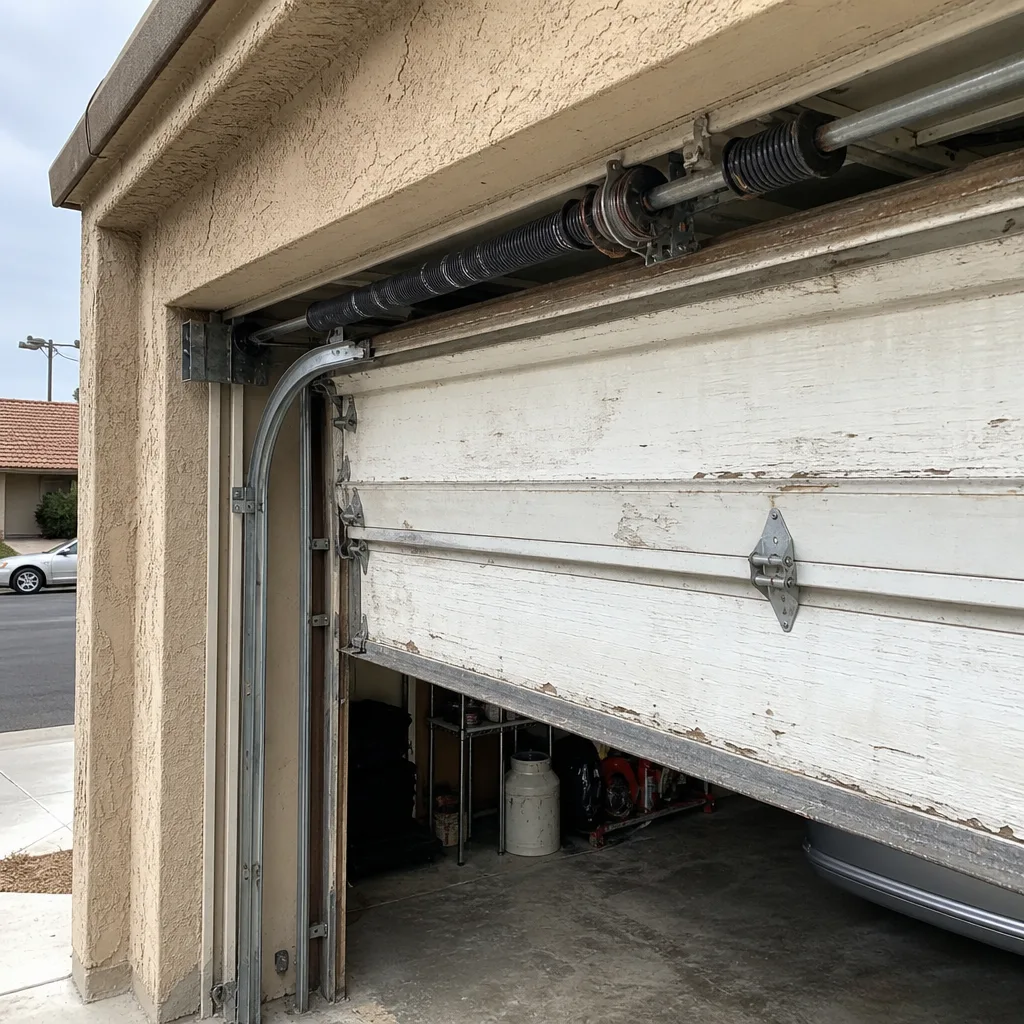
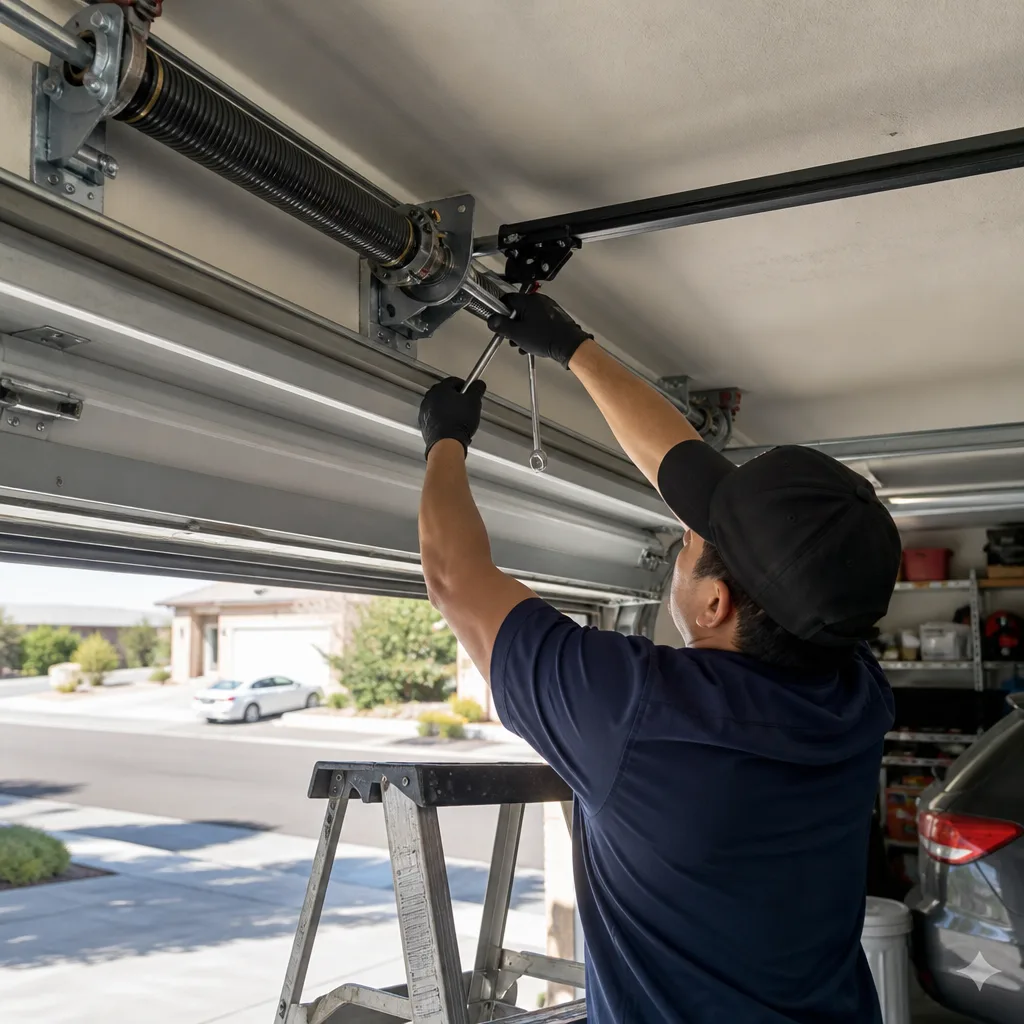
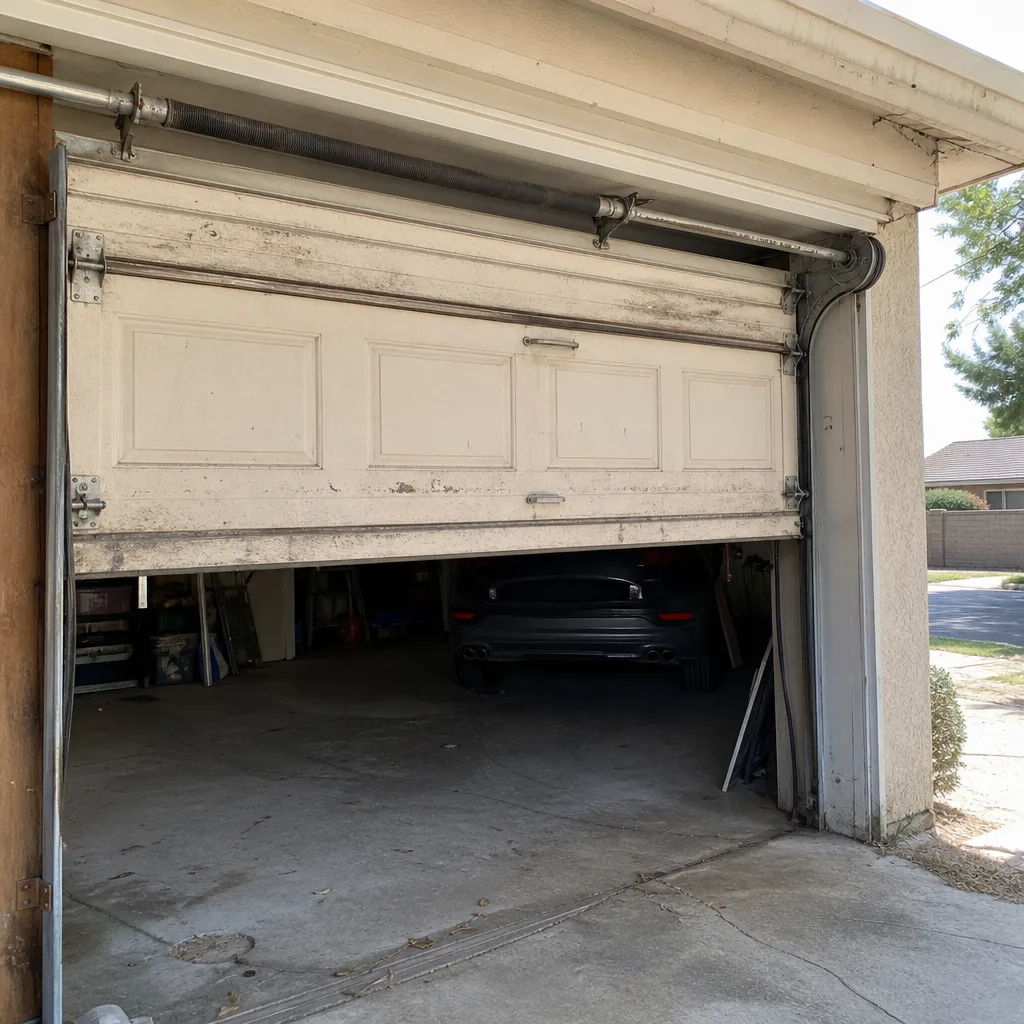
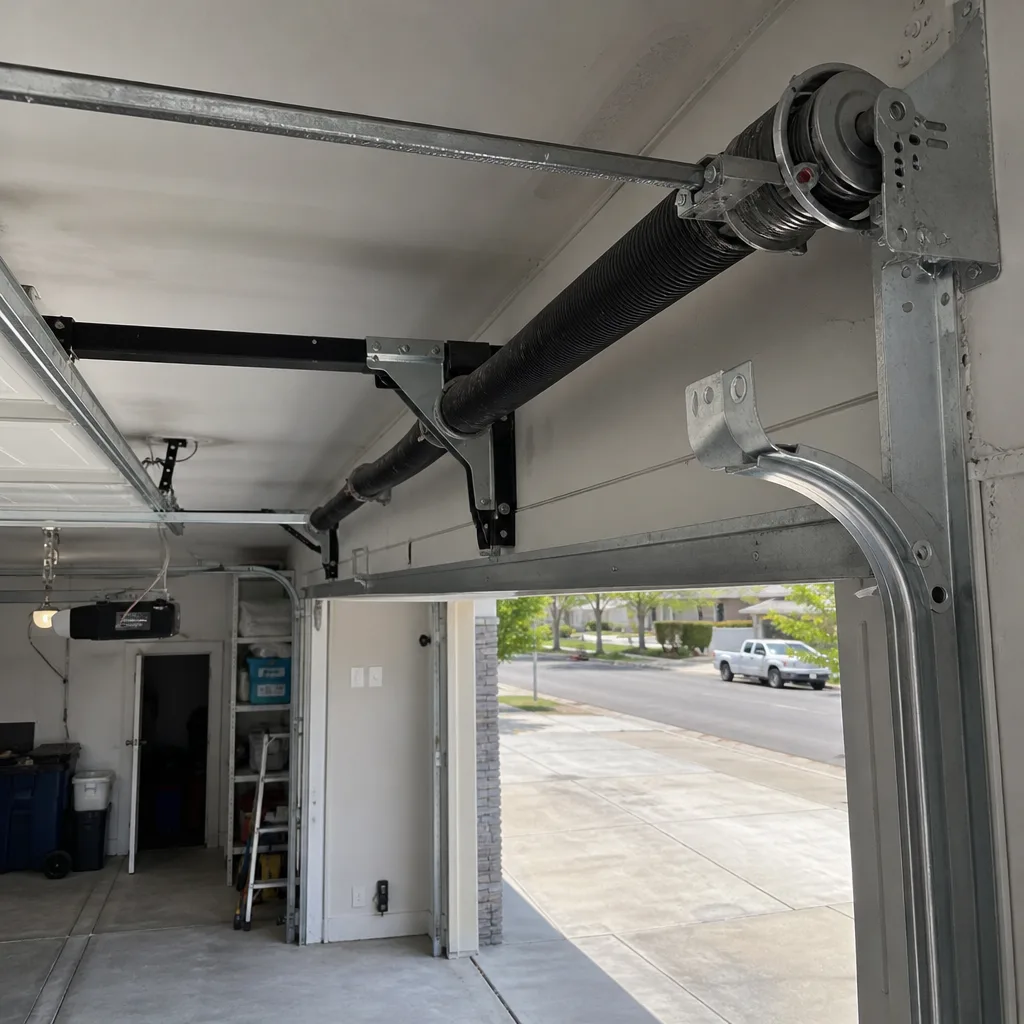
Torsion springs are the most dangerous and most misunderstood part of your garage door. They sit horizontally above the closed door, under tension, and they do most of the actual lifting. The opener motor just nudges things along. When a spring breaks, the door stops moving, usually with a bang that sounds like a firework going off inside the garage.
In Beaumont, heat is the silent accelerator. Here’s the thing most guides won’t tell you: a torsion spring’s lifespan is measured in cycles, not years. One cycle is one open and one close. A standard spring is rated for about 10,000 cycles. A family of four with two cars and regular access to the garage can run through 2,500 cycles a year. Do the math and that spring should last about four years. But add the Beaumont heat factor, the dry grease, and the metal fatigue from temperature swings, and we routinely see springs fail at the three-year mark in this city.
What does a broken torsion spring look like? You’ll see a gap in the coil, usually about an inch or two wide. The door will be impossible to lift by hand. And here’s the part we can’t skip: a torsion spring under partial tension stores enough energy to break bone. Winding and unwinding these springs requires specific tools and specific technique. Homeowners end up in emergency rooms every year attempting this repair with screwdrivers and internet instructions. This is not a project. This is a job for a trained technician with the right torsion bars.
We replace torsion springs as a pair, even if only one is broken. The reasoning is straightforward: both springs have cycled the same number of times. If one gave up, the other is close behind. Replacing both on the same visit costs less than two separate emergency calls, and it keeps the door balanced, which extends the life of the opener motor and the cables. A spring replacement on a standard Beaumont home is usually a same-day fix. We keep common spring sizes on the truck for exactly this reason.
Cables, Rollers, and Tracks: What Grinds, What Squeals, What Needs Replacing
Three mechanical systems work together to keep your door moving straight and quiet: the lift cables, the rollers, and the tracks. When one wears out, the other two take more abuse. Here’s what to listen for and what it means.
A grinding sound when the door moves almost always means dry rollers. Most doors in Beaumont run on metal rollers with unsealed bearings. The bearings are cheap to replace, maybe $10 to $20 per roller, and swapping all of them takes under an hour. Grinding that goes unresolved for months can wear out the track itself, and that’s a completely different job, because track replacement means re-hanging the door and re-setting the limits.
A squealing sound from the top of the door usually points to a dry pulley or bearing on the torsion tube. This is a lubrication issue, not a structural one. A silicone-based spray fixes it in minutes. We do this as part of any garage door opener repair in Beaumont call when we’re already on-site, because it costs nothing and keeps the door quiet.
A cable that’s slack or visibly frayed is a time bomb. Lift cables are under the same tension as the springs. When a cable snaps, the door can slam down on one side and bend the panels or even pull the track off the wall. Fraying is a sign that individual strands are already failing. Get it replaced before it breaks completely.
One thing we notice on older Beaumont homes, especially those built during the early 2000s expansion east of the 10, is that builder-grade track hardware tends to be thinner than what a professional installer would spec today. It bends more easily, especially when hit by a car bumper or a kid’s bike. If your home is original from that era and the door has never been serviced, it’s worth having the hardware inspected during your next tune-up, even if nothing has visibly failed.
Garage Door Openers: When the Motor’s Fine but Nothing Moves
The opener is the motor unit, the rail, the sensors, and the wall button. It’s also the most common source of electrical failure in a Beaumont garage, because the logic board sits inside a metal housing that absorbs heat all day. Five specific problems account for almost every opener call we handle in this city.
First: the opener runs but the door sits still. You press the button, the motor hums, nothing else happens. That’s almost always the drive gear, the plastic gear inside the opener head. It strips after years of use, and the motor spins without engaging the chain or belt. The part is inexpensive; the job is straightforward. On LiftMaster and Chamberlain units, which are the two most common brands in Beaumont garages, the drive gear replacement is often the fastest path back to a working door. We also see plenty of Craftsman units from the late 2000s still in service; they use the same gear design and fail the same way.
Second: the opener starts to move the door and then reverses. Nine times out of ten, this is the safety sensors at the bottom of the door track. They need to see each other in a straight line. If they’re knocked out of alignment, blinking, or covered in dust, the opener thinks something is in the way and reverses. Clean them, make sure the small lights are solid, and try again. If the problem persists, it could be a wiring issue between the sensor and the logic board.
Third: the keypad or remote works intermittently. That points to the logic board on its way out, and heat accelerates it. Some openers fail gracefully: the buttons work when the garage is cool in the morning and stop working at 4pm when the space is at its hottest. That’s a telltale sign of a failing receiver on the board. Replacing the logic board on a Genie or Raynor unit often restores full function without replacing the entire opener.
Fourth: the opener is completely dead. Check the outlet, the breaker, and the small fuse on the opener itself if it has one. After that, it’s a logic board replacement. We carry boards for most LiftMaster, Chamberlain, and Genie model families on our trucks, which means we can often repair rather than replace the opener in one visit.
Fifth: the opener works but the door is sluggish. That’s rarely the opener. It’s the springs losing tension, which forces the motor to work harder. The opener is rated to lift a certain weight, and when the springs sag, the load shifts to the motor. Fix the springs first, and the opener usually stops complaining.
Can This Be Fixed Today? What Beaumont Homeowners Should Expect
When your garage door fails, the first question is almost always about timing. Can someone come today? How fast can this be resolved? Here’s an honest breakdown by problem type.
Same-day candidates: broken torsion springs, misaligned sensors, stripped openers gears, snapped lift cables, doors off their tracks. These are the repairs we stock parts for and handle in a single visit. In Beaumont, most of our repair calls are completed on the day you call.
Next-day or scheduled candidates: full panel replacements, complete door installations, and opener replacements when a logic board isn’t available for an uncommon model. These involve either ordering specific panels in a matching color and style, or measuring a new door for the opening. A full garage door installation in Beaumont is a scheduled job, not an emergency call, and it comes with a written quote before any work begins.
One thing to know about pricing: we quote the repair before we start. Not after. The price we give you over the phone for a spring replacement or a sensor fix is the price on the invoice, unless we discover something else while on-site, and if we do, we show you before we touch it. That’s how we’ve always done it, and it’s how a repair call should work regardless of which company you choose.
Attached vs. Detached Garages: Why It Changes the Urgency Math
Most Beaumont homes built in the last two decades have attached garages, which means the garage shares a wall or ceiling with living space. Older homes, especially in the original downtown core and along Beaumont Avenue, more often have detached garages. The difference matters when something breaks.
In an attached garage, a broken door is a household problem, not just a garage problem. If the door won’t close, the house is open. If the door won’t open, a car is trapped, and a morning commute is a genuine emergency. Attached garages also transfer more heat noise and dust into the home, which makes a warped bottom seal or a noisy roller a quality-of-life issue, not just a garage issue. Spring failures in attached garages are also louder inside the house, which is why we get so many calls from homeowners who heard the boom in their living room.
In a detached garage, the urgency drops a notch. The car may be stuck, but the home’s security envelope isn’t compromised, and the noise is contained to a separate structure. We still recommend repairing a broken spring quickly, because an unbalanced door can warp the tracks and damage the cables if someone tries to force it open. But a detached garage door failure rarely requires the same emergency priority as an attached one.
What doesn’t change is the heat equation. A detached Beaumont garage gets even hotter than an attached one because it has no shared wall with a cooled home. Everything we described above about spring fatigue and logic board degradation applies in double measure. If your detached garage is uninsulated and has no ventilation, consider having the springs and opener inspected annually, before the July and August peak.
Common Mistakes to Avoid
- Attempting a torsion spring repair with hand tools. This is the number one cause of garage-door-related emergency room visits in the United States. The spring is under hundreds of pounds of tension. What looks like a simple removal can become a serious injury in a fraction of a second.
- Ignoring a fraying cable. A frayed cable doesn’t break on a schedule. It breaks while the door is moving, and when it goes, the door can come down hard on one side, bending panels and pulling track hardware off the wall.
- Replacing only the broken spring. It saves $80 today and costs you a second service call in six months, because the other spring has cycled the same number of times and is just as close to failure. Always replace both.
- Spraying WD-40 on rollers and tracks as seasonal maintenance. It works for about a week and then attracts dust, which grinds the bearings faster. Roller bearings need grease specifically designed for them, and tracks should stay dry.
- Calling a brand-specific installer for a builder-grade door. Builder installations in Beaumont often use entry-level doors. When those need parts, a brand-specific installer may no longer stock them, because the brand moved on to newer models. A multi-brand technician can often source a compatible part instead of insisting on a full door replacement.
- Delaying a bottom seal replacement because the gap looks small. In Beaumont, that gap is how August heat, dust, and even small pests get into the garage, and from there into the home in an attached layout. A seal is $15 to $30. The accumulated cooling cost from a leaking seal dwarfs that in a single summer.
When to Call a Professional
Call a professional when the door is off its tracks, when a torsion spring is broken, when a cable is fraying, or when the opener is completely dead and you’ve already checked the outlet and breaker. These are the jobs where the risk of injury or further damage outweighs any do-it-yourself savings. A track misalignment can become a panel replacement if you keep running the opener against it. A frayed cable can snap. A broken spring can injure you if you attempt the winding yourself. If the door still won’t move after pulling the release cord, or if you see a visible gap in the spring coil above the door, stop and call. You can also check out The Complete Guide to Garage Door in Beaumont for additional context. Northgate Garage Door Repair offers free estimates in Beaumont, call (833) 593-7152 and we’ll walk you through what you’re seeing before we even schedule the appointment.
Frequently Asked Questions
Most Beaumont garage door repairs run between $125 and $450 depending on the part. Simple fixes like sensor realignment or roller replacement sit at the low end. Torsion spring replacement, which includes both springs, typically runs $250 to $400 for a standard door. Opener logic board replacement usually lands in the $200 to $350 range. Call (833) 593-7152 for an exact quote on your specific door; estimates are free and we quote before any work begins.
Yes, for most repairs. Spring replacements, cable fixes, sensor issues, and drive gear replacements are all same-day jobs in Beaumont, and we carry those parts on the truck. Full door installations and panel replacements are scheduled after a measurement and a written quote. Call (833) 593-7152 to check today’s availability.
No, not without your approval. We quote the repair before we start, and that’s the price you pay unless we find something else while on-site, in which case we show you what we found and quote the additional work before touching it. You’re never surprised by an invoice at the end of the visit.
For the most common repairs in Beaumont, yes. We stock torsion springs in standard sizes, lift cables, rollers, sensors, drive gears, and logic boards for the most common LiftMaster, Chamberlain, Genie, and Craftsman models. That’s what allows same-day service on most calls. Call (833) 593-7152 with your opener model number if you want to confirm before we come out.
Yes. We work on Amarr, Wayne Dalton, Clopay, Raynor, and every other major brand installed in Beaumont garages. We don’t push a single manufacturer’s product line, and we don’t require a specific brand of parts. If your Amarr panel is damaged, we’ll source a matching panel or a compatible repair option, and we’ll tell you the most cost-effective path whether that’s a repair or a replacement.
Once a year, ideally in late spring before the heat peaks. The service includes lubricating the springs and rollers, checking cable tension, testing the opener’s force settings, inspecting the bottom seal, and tightening the track hardware. In Beaumont’s climate, that annual visit catches dry grease and heat-damaged seals before they become July emergencies. If you skip it, you’re rolling the dice on a mid-summer spring failure.
The Bottom Line
Beaumont’s heat and wind are hard on garage doors. Bottom seals crack in two summers, torsion springs fail at three years, and opener logic boards die years before their warranty promises. Half of these failures are preventable with annual maintenance, and nearly all of them are repairable in a single same-day visit if you catch them early. The diagnostic rule to remember is simple: pull the red cord, try to lift the door by hand, and you’ll know in two minutes whether you have a mechanical problem or an electrical one. If it’s mechanical and you feel resistance, stop and call. If it’s electrical and the sensors check out, it’s probably the logic board, and it’s replaceable. Whatever brand your door is, and whatever shape it’s in, start with an honest diagnosis. We’ll give you one over the phone at (833) 593-7152, free, and tell you whether it’s worth a service call. For everything else on this topic, start at the Northgate Garage Door Repair home page.
Written by the team at Northgate Garage Door Repair, serving Beaumont since 2015. Looking for more guides & resources?
Styles & brands we work with
- Raised-panel steel
- Carriage house
- Modern flush
- Full-view glass
- LiftMaster openers
- Chamberlain openers
See the difference
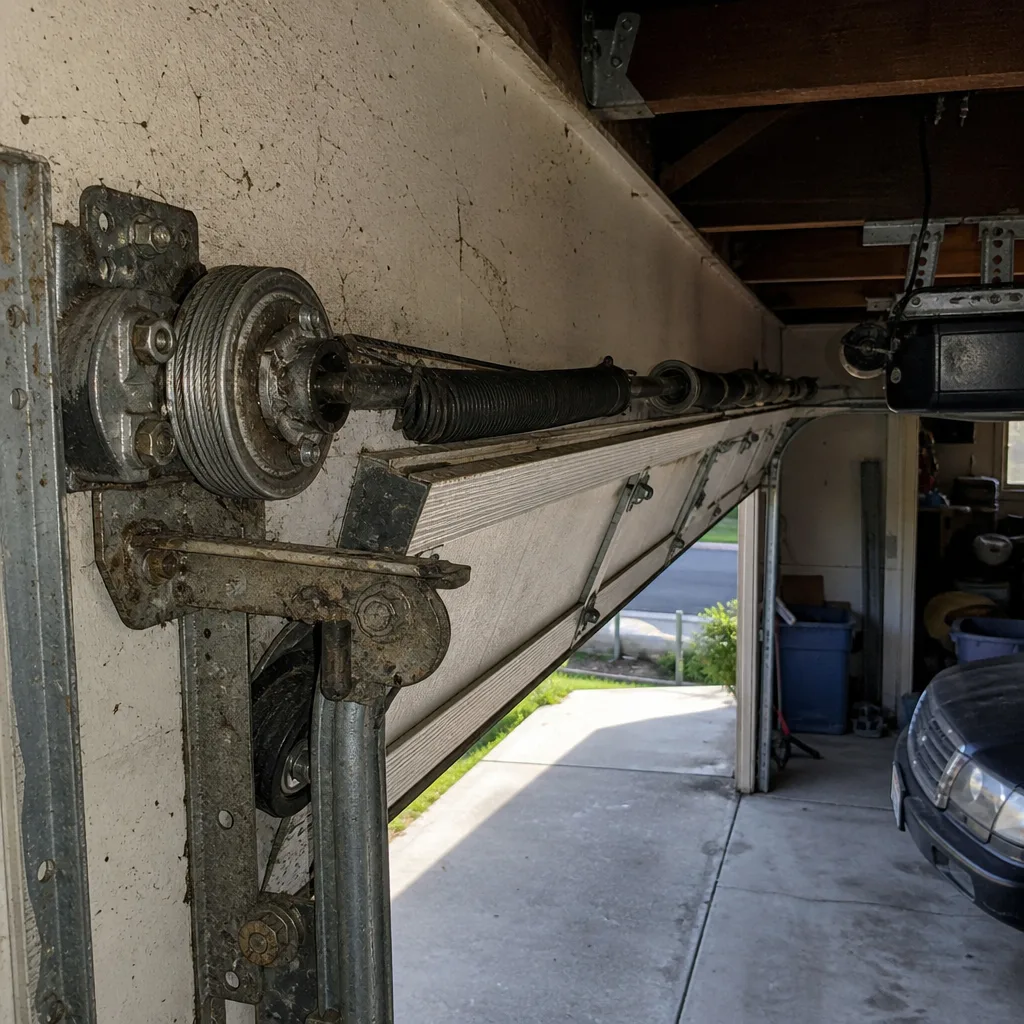 Before
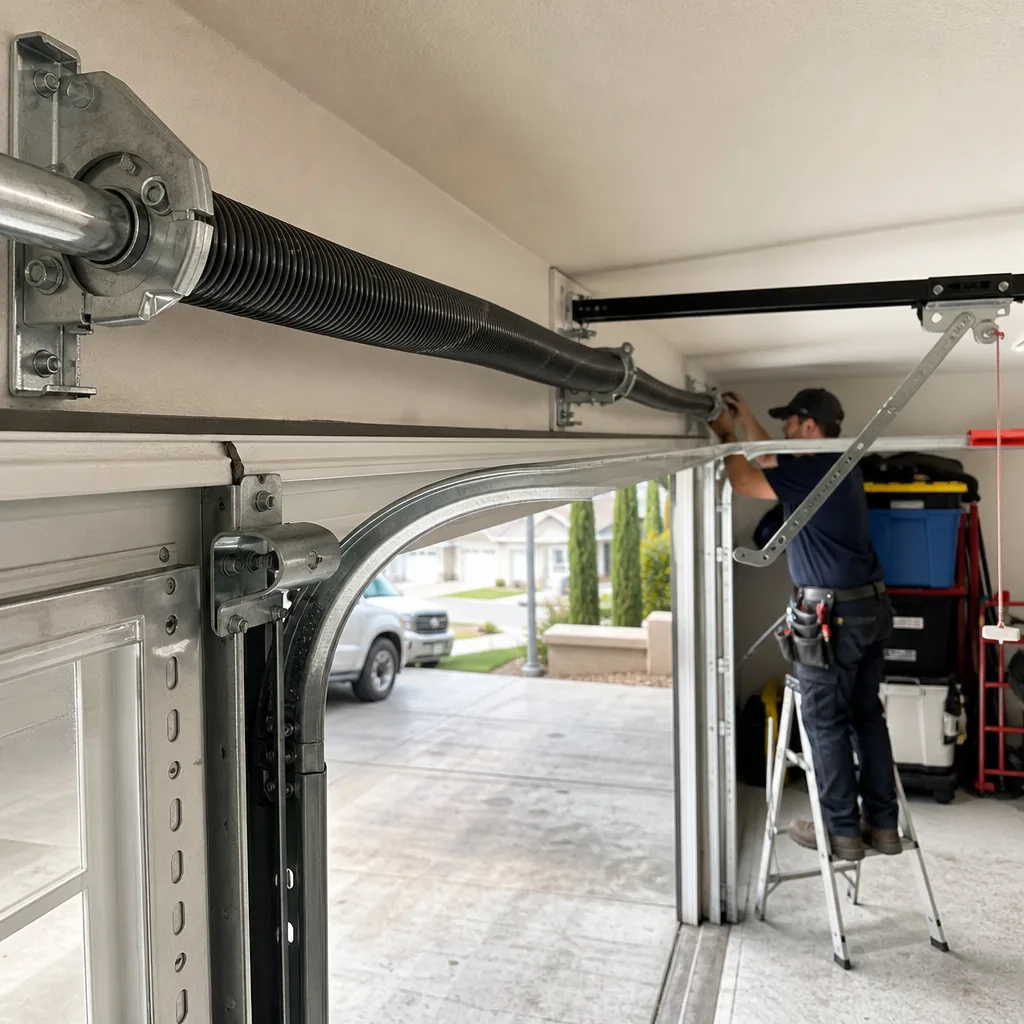 After
 Before
 After
 Before
 After